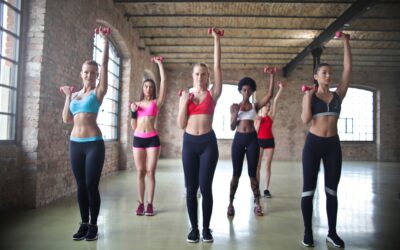
Group workout ideas for martial arts students combine partner drills, team challenges, and structured circuit training to keep every skill level engaged and motivated. When your training partners push alongside you, accountability rises and quitting early becomes nearly impossible. This guide covers 10 creative, no-equipment-needed group fitness routines built specifically for Korean martial arts and self-defense studios like Dragon Mu Sool.
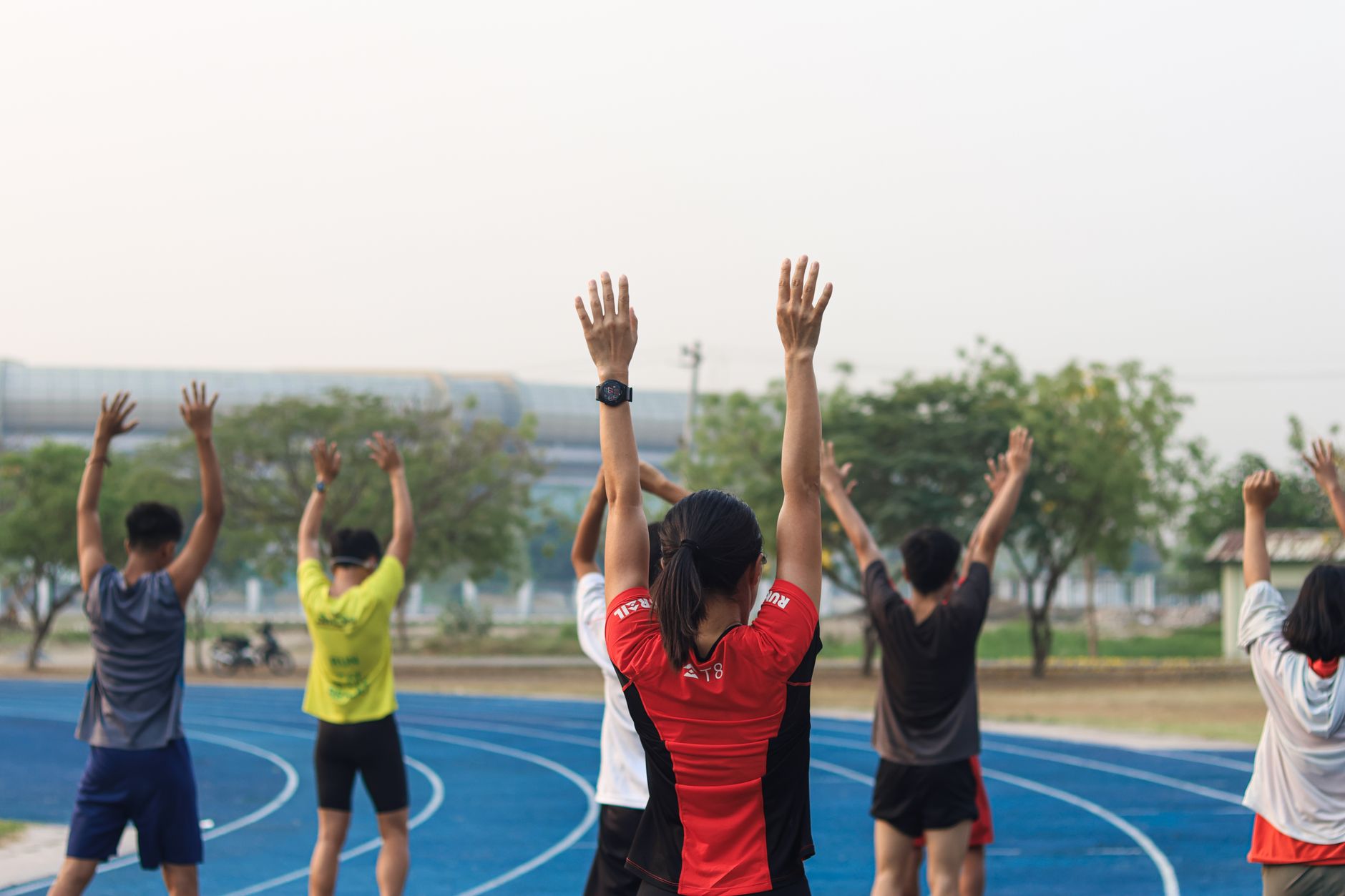
1. Partner Striking Drills: The Core of Group Martial Arts Workouts
Partner striking drills are arguably the most effective group workout format in any Korean martial arts class. One person feeds the target while the other executes punches, palm strikes, or knife-hand strikes at controlled speed. Rotate every 90 seconds so both partners stay aerobically active. This small group workout idea requires nothing but open floor space and a focused mind.
What makes partner striking so powerful as a group fitness workout is the built-in coaching loop. The feeder gives instant feedback on speed, angle, and power, which means every rep carries real intention. According to ACE Fitness, partnered exercise sessions consistently show higher adherence rates than solo training because social accountability keeps people showing up. Rotate partners every three rounds so students learn to read different body types and timing rhythms.
- Alternate between high strikes, mid strikes, and low kicks to train full-body coordination.
- Use count-based rounds (10 strikes per combo) to add a mental focus layer.
- Add a defensive slip or block between each offensive burst for realistic self-defense context.
2. Kuk Sool Circle Drills: Traditional Korean Group Fitness Workouts
Circle drills are a staple of Kuk Sool group classes and one of the most rewarding team fitness activities a martial arts instructor can run. Students stand in a large circle and the drill flows from person to person, whether it is a joint lock, a throw entry, or a wrist release technique. Everyone watches, everyone waits their turn, and everyone stays mentally engaged the entire time.
This format works beautifully as both a group fitness class idea for instructors and a rank-review tool. Senior students demonstrate crisp technique while junior belts absorb details they would miss in individual drilling. Circle drills also build the culture of mutual respect that is at the heart of Dragon Mu Sool’s philosophy. When the circle rotates smoothly, the room feels like a team, not a collection of individuals.
- Keep the pace brisk so waiting students stay warm and attentive.
- Pause the circle occasionally for a senior student to demonstrate a correction for the whole group.
- Use circle drills as a warm-down by slowing the technique speed and focusing on clean form.
3. No-Equipment Group Fitness Circuits for Martial Arts Conditioning
Group workouts with no equipment are among the most requested fitness class ideas for instructors who teach in spaces without a lot of gear. A well-designed bodyweight circuit can build the explosive power, core stability, and cardiovascular endurance that every Kuk Sool practitioner needs. The key is sequencing exercises so one muscle group recovers while another works.
A sample no-equipment group workout circuit might look like this: 30 seconds of horse-stance squats, 30 seconds of sprawl-to-stand (a wrestling-style explosive hip drill), 30 seconds of push-up to side plank, and 30 seconds of jumping knee strikes. Rest 20 seconds, then repeat three times. This type of group fitness workout template scales easily: beginners do standard versions while advanced students add speed or depth. CDC Physical Activity guidelines recommend at least 150 minutes of moderate aerobic activity per week for adults, and structured circuits like this help students hit that target without ever leaving the dojo.
- Post the circuit on a whiteboard so students self-regulate without constant verbal cueing.
- Use a class timer app projected on a screen for shared pacing.
- Modify for children by shortening work intervals to 20 seconds and adding playful names to each exercise.

4. Team-Based Relay Races: Fun Group Workout Ideas That Build Camaraderie
Relay races transform a normal conditioning session into one of the most fun group workout ideas in the gym. Divide the class into two or three teams. Each member sprints to a line, performs a designated martial arts technique (five front kicks, three spinning back kicks, or a full self-defense sequence), and tags the next teammate. The team that finishes first with the cleanest form wins.
The beauty of relay-style small group workouts is that they tap into healthy competition without creating individual pressure. Students cheer each other on, slower teammates receive encouragement rather than criticism, and the energy in the room spikes noticeably. This mirrors the military group workouts model where unit cohesion is built through shared physical challenge. If you want to build confidence through martial arts, few formats do it faster than a team relay where a hesitant student feels their teammates’ trust.
- Handicap strong teams slightly (extra reps) so races stay close and exciting.
- Award points across multiple relays to build season-long team rivalry.
- Film a round occasionally so students can review their technique after the adrenaline fades.
5. Small Group Self-Defense Scenario Drills
Self-defense scenario drills are the most real-world application of small group workout ideas in a Korean martial arts setting. Divide students into groups of three: one attacker, one defender, one coach. The attacker presents a realistic threat (wrist grab, bear hug, verbal confrontation cue), the defender applies a Kuk Sool technique, and the coach scores execution on a simple 1-3 rubric. Rotate roles every two minutes.
This format teaches students to perform under mild stress, which is exactly the environment self-defense skills need to be tested in. It also gives the instructor-coach role to intermediate students, which deepens their understanding faster than passive observation. For parents researching group fitness class ideas for their children’s martial arts program, scenario drills are an excellent way to practice personal safety in a controlled, respectful environment. Research from NASM confirms that stress-inoculation training significantly improves skill retention under pressure.
- Start scenarios from neutral (no warning) rather than telegraphed attacks to build realistic reaction time.
- Keep verbal cues consistent so students recognize common real-world threat patterns.
- Always debrief after each rotation so learning sticks and safety stays the priority.
6. Group Hyung (Form) Synchronization: A Unique Fitness Class Idea for Instructors
Running the whole class through a hyung (Korean martial arts form) in perfect synchronization is both a fitness workout and a moving meditation. When done correctly, synchronized form practice burns serious calories, improves proprioception, and builds the mental focus that separates good martial artists from great ones. It is also visually stunning when an entire class moves as one.
As a group fitness workout for instructors, synchronized hyung has one major logistical advantage: it requires no equipment, no partners, and minimal setup. Call counts aloud or use a metronome-style beat to keep everyone locked in step. For advanced classes, remove the count and see if the group can stay together using only peripheral awareness. This fitness class idea doubles as a rank-preparation tool because students identify gaps in their forms when surrounded by peers executing the same sequence.
- Video the synchronized run so students can see the group shape from outside their own body.
- Layer difficulty by adding a breath-control component: exhale on every strike, inhale on every chamber.
- Use this format at the end of class as a cool-down performed at 50 percent speed.
7. Military-Inspired Group Conditioning: High-Intensity Team Workouts
Military group workouts have a long tradition in martial arts culture, and for good reason. Formats like fireman carries, buddy squats, and log-press simulations (using a foam roller or resistance band between two students) force partners to communicate and synchronize effort. These high-intensity group workout ideas push cardiovascular capacity while requiring genuine teamwork.
At Dragon Mu Sool, this type of partner conditioning reinforces core values: you do not quit because your partner is counting on you. A practical routine might include: 10 partner wheelbarrow walk-outs (one person walks on hands while the other holds their ankles), 15 synchronized squat jumps facing each other, and 20 resistance-band mutual rows. Rest 30 seconds, repeat four rounds. IDEA Health and Fitness research shows that partner-based high-intensity training improves both cardiovascular output and exercise enjoyment compared to individual HIIT sessions. Check out our group fitness classes page for more structured templates you can adapt to any skill level.
- Match partners by similar body weight for safety on load-sharing exercises.
- Introduce these drills gradually so newer students build body awareness before adding intensity.
- Keep rounds short (under 5 minutes) with clear rest windows to maintain quality throughout.
8. Group Sparring Rotations: Structured Fun for All Skill Levels
Organized sparring rotations are one of the most effective group workout formats in any martial arts curriculum. Set up stations around the mat: light-contact sparring, focus mitt work, heavy bag combinations, and shadow sparring. Students rotate every three minutes, hitting every station in one class. This group fitness workout template keeps heart rates elevated for 30 to 40 straight minutes.
The station format is brilliant for mixed-rank classes because each station can be calibrated independently. Beginners get the shadow sparring station and focus mitt work while advanced students handle light-contact rounds. Nobody is ever waiting idle, which is the silent killer of group motivation. Harvard Health notes that varied exercise stimuli within a single session improve both neuromuscular adaptation and long-term adherence, which is exactly what a well-designed sparring rotation delivers.
- Assign senior students as station captains to coach and ensure safe practice.
- Use a loud buzzer between rotations so transitions stay crisp and total class time stays predictable.
- Debrief as a full group after the rotation cycle to share observations and reinforce technique lessons.
9. Mindfulness and Breathing Circles: Group Yoga-Inspired Cooldowns
Not every group workout idea needs to be high-intensity. Ending a hard training session with a structured breathing circle is one of the most underused fitness class ideas for instructors. Students sit in a circle, close their eyes, and follow a counted breathing pattern: inhale four counts, hold four counts, exhale four counts. The instructor guides a brief body-scan visualization focused on the muscles used during class.
This practice aligns perfectly with Dragon Mu Sool’s emphasis on inner strength and personal development. Physical conditioning without mental discipline is only half the picture. A five-minute mindfulness circle at the end of class lowers cortisol, improves recovery, and sends students home calmer and more focused. It also models the meditative roots that Korean martial arts have always carried. You can learn more at Dragon Mu Sool about how mindfulness is woven into every class structure, from warm-up to cool-down.
- Keep the tone calm but purposeful so students understand this is training, not an optional add-on.
- Introduce a single focus intention at the start (“tonight we focus on patience”) and revisit it during the breathing circle.
- Progress to longer guided visualizations as the class builds the habit over multiple weeks.
10. Belt-Level Group Challenges: Motivating Martial Arts Fitness Drills
Belt-level group challenges are the secret weapon of fun group workout ideas in a structured martial arts school. Design a monthly challenge that every belt rank must complete as a unit. White belts might do 100 front kicks as a group in under three minutes. Brown belts might execute 50 perfect throws without breaking form. When the group succeeds, everyone celebrates. When they fall short, they train together to hit the target next session.
This format creates the kind of shared identity that keeps students enrolled long-term. It also gives instructors a clean, objective metric for group fitness progress without singling anyone out individually. For a group workout ideas template that works for any class size, the belt-level challenge scales from four students to forty. Pair this with a visible progress tracker on the gym wall and watch motivation climb week over week.
- Set the challenge threshold just above current group capacity so it requires real effort but stays achievable.
- Photograph or log completed challenges to build a tradition students look back on with pride.
- Let senior belts design occasional challenges for their own rank to build leadership and ownership.
Start Your Group Training Journey at Dragon Mu Sool
Group workouts in a Korean martial arts studio are unlike anything else in fitness. They build strength, sharpen reflexes, and create genuine human connections, all at the same time. Whether you are drawn to partner drills, team relays, or synchronized forms, the common thread is this: training together makes every individual better. If you are ready to experience the energy of a real group martial arts class firsthand, we invite you to contact us today for a free trial class at Dragon Mu Sool and see why our students call it the best hour of their week.
Frequently Asked Questions
What are the best group workout ideas for a martial arts class with mixed skill levels?
The most effective group workout ideas for mixed levels include station rotations, circle drills, and relay races, since each format allows difficulty to be calibrated per student without slowing down the group. Partner-based drills also work well because senior students naturally coach junior partners, creating a teaching loop that benefits both sides.
Can group fitness workouts be done without any equipment?
Absolutely. Some of the most effective group fitness workouts for martial arts students use only bodyweight: horse-stance circuits, partner resistance drills, synchronized forms, and sprawl-to-stand sequences all build real strength and endurance with zero gear. No-equipment group training is ideal for outdoor classes, travel seminars, or studios still building their supply of gear.
How long should a group fitness class be for martial arts students?
A well-structured group martial arts class typically runs 45 to 75 minutes. That window allows for a 10-minute warm-up, 30 to 45 minutes of technique and conditioning work, and a 5 to 10 minute cool-down. Longer sessions can work for advanced students, but quality of attention tends to drop after 90 minutes without a structured break.
Are group martial arts workouts suitable for children?
Yes, with appropriate modifications. Children thrive in group martial arts workouts because the social energy keeps them engaged. Shorten work intervals, use game-based formats like relay races, and keep instructions simple and visual. According to AAP HealthyChildren, kids aged 6 and up benefit greatly from structured group physical activity that combines coordination, social skill-building, and fun.
How do I keep a group motivated during a tough martial arts conditioning session?
Motivation during hard group workouts comes from three sources: clear structure, visible progress, and peer accountability. Post the workout on a board before class starts, use a timer everyone can see, and pair students strategically so effort levels stay balanced. Celebrate group milestones out loud, and always end sessions on a positive note, even if the training was demanding.