When comparing karate vs. taekwondo vs. jiu-jitsu for self-defense, jiu-jitsu generally gives untrained adults the fastest path to real-world protection because it focuses on controlling and submitting a larger attacker on the ground. Karate and taekwondo build powerful striking skills that work well at range. The right choice depends on your age, goals, and how you train. This post breaks down each style head-to-head so you can make a confident decision.
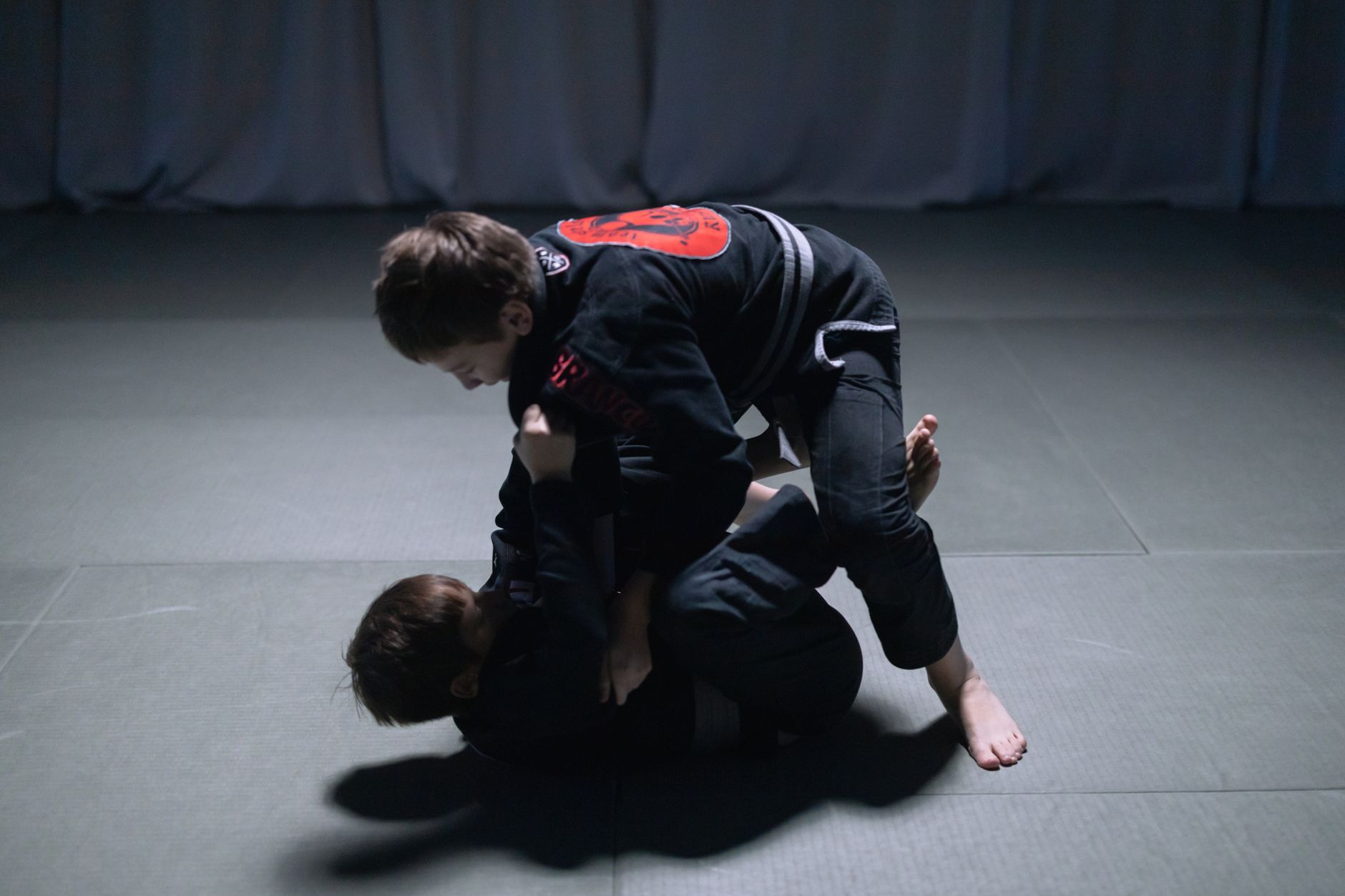
Karate for Self-Defense: Pros, Cons, and Who It Suits
Karate is one of the most recognized striking arts in the world, and for good reason. Rooted in Okinawan and Japanese traditions, karate for self-defense teaches punches, kicks, open-hand strikes, and joint locks that can stop a threat quickly when applied with proper technique. According to USA Karate, the sport has millions of practitioners across all age groups in the United States alone, which speaks to its accessibility.
Pros of karate for self-defense:
- Develops fast, powerful strikes that work at punching and kicking range
- Strong emphasis on discipline, focus, and mental conditioning
- Kata (forms) build muscle memory for defensive movement patterns
- Available for children as young as four or five years old
- Traditional schools also teach basic joint locks and takedown defenses
Cons of karate in a real fight:
- Many schools focus heavily on sport competition rather than street-applicable techniques
- Limited ground-fighting instruction means you may struggle if a fight goes to the floor
- Point-sparring formats can build habits (pulling punches, resetting) that do not transfer well to reality
Karate vs. jiu-jitsu is a common comparison, and the honest answer is that karate wins the stand-up striking battle but loses ground work almost every time. If you are looking at karate or jiu-jitsu for self-defense and you spend time in environments where an attacker is likely to grab or tackle you, karate alone may leave a gap. That said, a school that mixes karate striking with takedown defense gives you a very practical skill set.
Karate is also an excellent choice when considering martial arts for children. The structured belt system, respect rituals, and discipline-first culture mirror what martial arts for discipline and respect programs emphasize at a foundational level.
Taekwondo for Self-Defense: Pros, Cons, and Who It Suits
Taekwondo is a Korean martial art best known for its spectacular high and spinning kicks. As an Olympic sport since 2000, taekwondo for self-defense gets mixed reviews, mostly because the sport version rewards light, fast kicks to score points rather than kicks designed to end a confrontation. However, traditional taekwondo training, especially at schools that go beyond tournament prep, produces leg speed and kicking power that is genuinely dangerous at close to medium range.
Pros of taekwondo for self-defense:
- Builds exceptional leg strength, flexibility, and kicking speed
- High kicks can create distance and discourage attackers from closing in
- Strong cardiovascular conditioning from sparring rounds
- Great for kids: structured curriculum, clear progression, confidence-building
- Korean martial arts heritage shares philosophical overlap with arts like Kuk Sool Won, emphasizing respect and self-improvement
Cons of taekwondo in a real fight:
- Sport taekwondo rules discourage hand strikes and grappling, creating a gap in the curriculum
- High kicks require space and warm muscles; in a winter coat on an icy street, your options narrow fast
- Like karate, it offers little ground defense
The question of jiu-jitsu vs. taekwondo who would win in a real confrontation comes up constantly online. In a stand-up fight with space to kick, an experienced taekwondo practitioner has a clear edge. But if the fight closes to clinch range or goes to the ground, taekwondo training alone leaves you vulnerable. The karate vs. taekwondo vs. jiu-jitsu self-defense debate almost always ends with the same conclusion: no single art covers every scenario perfectly.
For kids specifically, taekwondo for kids remains one of the most popular entry points into martial arts, and you can read more about the specific benefits and how to get started with taekwondo classes for children.

Jiu-Jitsu for Self-Defense: Pros, Cons, and Who It Suits
Brazilian jiu-jitsu (BJJ) and traditional Japanese jiu-jitsu both share the core idea that a smaller, weaker person can control or submit a larger attacker using leverage, body positioning, and joint manipulation on the ground. The International Brazilian Jiu-Jitsu Federation (IBJJF) has helped standardize the sport globally, but the self-defense applications go far beyond competition rules.
Pros of jiu-jitsu for self-defense:
- Teaches how to survive and escape when a larger attacker takes you to the ground
- Live sparring (rolling) from day one builds real pressure-tested skills
- Highly effective in one-on-one situations, which cover the majority of real assaults
- Chokes and joint locks can end a fight without serious injury to either party
- Fitness benefits are substantial: strength, mobility, and cardio all improve quickly
Cons of jiu-jitsu in a real fight:
- Going to the ground is dangerous when multiple attackers are involved
- Limited striking instruction means you may be unprepared for a punch exchange before the clinch
- BJJ gi training does not always translate to street-clothes situations
- Younger children (under 7-8) may find the ground-oriented curriculum harder to follow than karate or taekwondo
Is karate or jiu-jitsu better for self-defense? The research-backed answer leans toward jiu-jitsu for adults in close-quarters situations, but karate and jiu-jitsu together form a more complete package. For a five-year-old, however, karate or jiu-jitsu for a 5-year-old is almost always answered in favor of karate: the standing, structured format keeps young kids engaged and safe.
How These Styles Compare Head-to-Head in a Self-Defense Scenario
Comparing karate vs. taekwondo vs. jiu-jitsu which is better requires looking at the most realistic scenarios most people actually face. The majority of civilian self-defense situations involve one attacker who is not a trained fighter. Here is how each art performs across the most common threat categories:
- Attacker swings a punch from distance: Karate and taekwondo practitioners are well-prepared here. Footwork, blocks, and counter-strikes are drilled constantly in both arts.
- Attacker grabs or tackles: Jiu-jitsu wins this scenario clearly. Karate includes some takedown defense, but jiu-jitsu’s entire curriculum is built for this moment.
- Fight goes to the ground: Jiu-jitsu is the only art of the three that systematically prepares you for this. Most karate and taekwondo students have almost no ground-fighting training.
- Need to create space and escape: Taekwondo’s powerful low and mid-level kicks can push an attacker back and create the distance you need to disengage.
- Protecting children or elderly adults: All three arts improve awareness and confidence, but AAP HealthyChildren notes that martial arts training in general supports healthy physical activity, coordination, and emotional resilience in young people.
When you see conversations about karate vs. kung fu vs. taekwondo vs. jiu-jitsu, the field widens further. Kung fu adds another striking and forms-based tradition, but the core comparison still holds: striking arts dominate at range, grappling arts dominate up close and on the ground.
For a deeper local perspective on how these styles match up in real scenarios, the post on martial arts self-defense training explores the practical application side in detail.
Karate vs. Taekwondo vs. Jiu-Jitsu for Kids: Which Should You Choose?
The karate vs. taekwondo vs. jiu-jitsu for kids question is one of the most common searches parents type when they are ready to enroll a child. The answer shifts considerably depending on your child’s age, personality, and what you want them to get out of training.
Ages 4-6 (karate or taekwondo): Young children thrive in structured, standing-based curricula. Karate and taekwondo both offer beginner programs built around short attention spans, basic stances, and simple kicks and punches. The belt system gives kids a clear, motivating goal ladder. Karate or jiu-jitsu for a 5-year-old is a real debate, but most developmental experts lean toward standing arts at this age for safety and engagement reasons.
Ages 7-10 (all three become viable): By this age, jiu-jitsu becomes much more accessible. Kids have the spatial awareness to follow ground-based instruction, and the playful rolling format keeps them engaged. Taekwondo and karate remain strong choices for kids who love kicking, competing in point sparring, or want to follow a structured rank system.
Ages 11 and up (personal preference drives the choice): Older kids and teens can handle any of the three styles. If a child is interested in MMA or wants the most complete self-defense toolkit, many coaches recommend starting with jiu-jitsu and adding striking classes over time.
One important note: the school matters more than the style. A passionate, safety-conscious instructor at a trusted martial arts academy will produce more confident, capable students than a poorly run school teaching any art.
What Makes Kuk Sool a Strong Alternative to Karate, Taekwondo, and Jiu-Jitsu
Most comparison posts stop at the three styles in the title, but there is a fourth option that often gets overlooked: Korean comprehensive martial arts like Kuk Sool Won. Kuk Sool is a systematic study of traditional Korean martial arts that includes strikes, kicks, joint locks, throws, and even weapons training, all under one curriculum.
At Dragon Mu Sool, Master Nathan teaches Kuk Sool to children and adults with an emphasis on personal development alongside physical skill. Where karate vs. taekwondo vs. jiu-jitsu discussions often frame martial arts as purely physical, Kuk Sool weaves discipline, respect, honor, and inner strength into every class. Students are not just learning how to throw a punch or escape a hold; they are building character.
From a self-defense standpoint, Kuk Sool addresses the gaps that any single art leaves open:
- Striking from standing (similar to karate)
- Powerful kicks at range (similar to taekwondo)
- Joint locks, takedowns, and ground awareness (overlapping with jiu-jitsu principles)
- Traditional weapons training that develops coordination and focus
If you have been going back and forth on karate or jiu-jitsu for self-defense, or wondering whether taekwondo is enough on its own, Kuk Sool offers a path that does not force you to choose. You can see more about how the striking components specifically stack up in the post on karate self-defense classes.
How to Choose the Right Martial Art for Your Goals
Choosing between karate vs. taekwondo vs. jiu-jitsu for a real self-defense situation comes down to a few honest questions. Here is a simple framework:
- Primary goal is fitness and discipline for a young child: Start with karate or taekwondo. The standing format, clear belt system, and short class segments work well for ages 4 through 8.
- Primary goal is real-world self-defense for an adult: Jiu-jitsu gives you the fastest practical return, especially for ground situations. Adding some striking training over time rounds out your skill set significantly.
- Primary goal is competition: All three have active competition circuits. Taekwondo is Olympic. Karate has a strong national tournament scene through USA Karate. BJJ has a thriving competition scene through the IBJJF.
- Want a complete system that does not require cross-training: A comprehensive Korean martial art like Kuk Sool gives you striking, grappling, and weapons all in one curriculum.
- Want a positive community environment for a child or family: Look for schools that emphasize values as strongly as technique. A school’s culture shapes long-term outcomes more than the style name on the door.
Physical conditioning matters in all three arts. ACE Fitness consistently highlights martial arts training as one of the most well-rounded forms of physical activity available because it combines aerobic work, strength development, and flexibility in every session.
If you are still weighing the options for a local school and want a side-by-side breakdown of styles available near you, the post on self-defense martial arts classes covers the local landscape in detail.
Our Recommendation: Which Style Wins for Self-Defense?
Here is the straight answer: no single style wins every scenario, but jiu-jitsu comes closest for adult self-defense because most real fights involve clinching and ground work. Taekwondo is excellent for creating distance and building explosive fitness. Karate teaches clean, powerful striking and is the most child-accessible of the three. If you want a system that covers all ranges without cross-training in multiple schools, a comprehensive Korean martial art like Kuk Sool is worth serious consideration.
The honest takeaway for anyone asking about karate vs. taekwondo vs. jiu-jitsu for self-defense is this: the style matters less than the school, the instructor, and how consistently you show up. A well-run Kuk Sool school, a serious BJJ gym, or a traditional karate dojo all produce capable, confident people when the teaching is genuine and the culture is right.
Ready to stop comparing and start training? At Dragon Mu Sool, we invite you to come experience it yourself. Sign up at Dragon Mu Sool martial arts school and contact us today for a free trial class, walk onto the mat, meet Master Nathan, and see firsthand why so many families call Dragon Mu Sool home.
Frequently Asked Questions
Is Taekwondo better for self-defense or Jiu-Jitsu?
Jiu-jitsu is generally more effective for self-defense in most real-world scenarios because the majority of physical altercations end up in a clinch or on the ground. Taekwondo’s kicking range is impressive and useful for creating distance, but once an attacker closes the gap, jiu-jitsu practitioners have far more tools available. For complete protection, training in both striking and grappling is the most practical approach.
Is karate or jiu-jitsu better for self-defense?
It depends on the situation. Karate is stronger at punching and kicking range, making it useful in open-space confrontations. Jiu-jitsu takes over in close-quarters and ground situations, which is where most real fights end up. Many serious self-defense students train in both. If you can only choose one, jiu-jitsu gives adults a slight edge for practical street scenarios.
Karate or jiu-jitsu for a 5-year-old: which is better?
Karate is almost always the better starting point for a 5-year-old. The standing curriculum, structured class format, and short drill sequences match the attention span and coordination of young children. Jiu-jitsu’s ground-based, leverage-focused techniques become much easier to absorb around ages 7 to 8. Starting with karate at 5 builds the discipline and body awareness that makes future jiu-jitsu training smoother.
Can you learn karate, taekwondo, and jiu-jitsu at the same time?
Technically yes, but it is rarely practical for beginners. Training multiple styles simultaneously can fragment your focus and slow progress in all of them. Most coaches recommend mastering one art’s fundamentals for one to two years before adding a second discipline. A comprehensive art like Kuk Sool, which includes striking, kicking, and joint-lock techniques, is a good way to develop a well-rounded skill set without splitting time between multiple schools.
Which martial art is best for kids who want self-defense and personal development?
For children who want both self-defense skills and character growth, a school that treats personal development as part of the curriculum is more important than which style is on the sign. Arts like Kuk Sool, traditional karate, and taekwondo all emphasize respect, discipline, and confidence when taught well. Look for small class sizes, a positive community culture, and an instructor who knows each student by name.