Learning Brazilian jiu-jitsu starts with finding a qualified instructor, attending consistent classes, and embracing the process of getting tapped out while you grow. BJJ is a ground-based grappling art that rewards patience, repetition, and smart training partners. This guide walks Sylmar beginners through 16 actionable tips, from choosing the right gym to drilling jiu-jitsu techniques step by step so you build real skill fast.
Step 1: Understand What Brazilian Jiu-Jitsu Actually Is
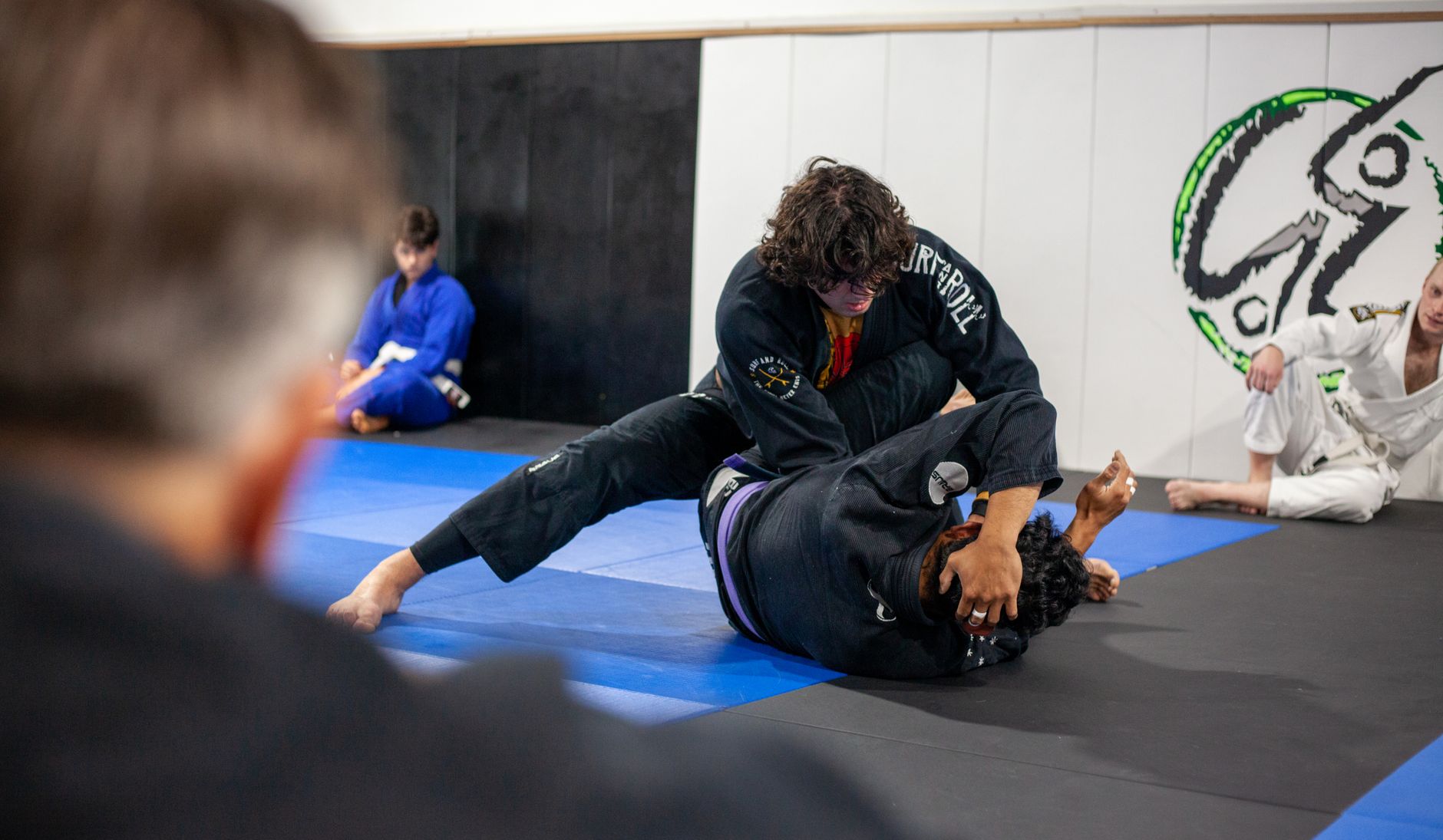
Before you step on the mat for the first time, it helps to know what you are signing up for. Brazilian jiu-jitsu, often called BJJ, is a martial art built around taking an opponent to the ground and using joint locks and chokes to end a fight without striking. Because it relies on leverage and technique rather than raw size, it is one of the most practical self-defense arts for people of all body types.
Residents of Sylmar who are searching for THE BEST 10 Martial Arts near SYLMAR, LOS ANGELES … will quickly find that several martial arts disciplines are taught in the area. BJJ is just one option, and understanding how it differs from striking arts like boxing or karate helps you decide if it matches your goals.
The International Brazilian Jiu-Jitsu Federation (IBJJF) oversees most competitive BJJ events worldwide and publishes the ranking system used by most academies. Understanding how the belt progression works, from white to black, gives you a roadmap for your training journey before you ever tie on a gi.
At its core, jiu-jitsu is a problem-solving sport. Every roll (the BJJ term for sparring) is a live puzzle you solve with your body. That mental engagement is one reason so many people in Sylmar who start BJJ stay with it for life.
Step 2: Choose the Right Martial Arts School in Sylmar
Choosing the right gym is probably the single most important decision a beginner can make. The quality of the instructor, the culture of the school, and the variety of training partners will shape your entire early experience. A toxic or careless environment can injure beginners and kill motivation fast.
When you are looking for Fitness martial arts in Sylmar near me, here are the things to look for in any school you visit:
- Qualified instructors: Check that the head instructor has a legitimate rank and teaching experience. Schools with coaches who hold credentials from recognized governing bodies tend to produce safer, more technically sound students.
- Clean mats: Grappling arts involve constant contact with the mat surface. A gym that does not clean its mats regularly is a health risk, plain and simple.
- A welcoming culture: Watch a class before joining. Are upper belts helpful to white belts? Do people shake hands and bow before and after rolls? Respect is non-negotiable.
- Class schedule that fits your life: Check the class schedule of any gym you consider. If the only available classes conflict with your work or family time, consistency will suffer.
- Trial class availability: Any reputable school will offer a free trial class. If a gym pressures you to sign a contract before you have tried a single session, walk out.
While Dragon Mu Sool, led by Master Nathan, specializes in Kuk Sool, a comprehensive Korean martial art that covers striking, joint locks, and throws, many of the foundational principles overlap directly with what Brazilian jiu-jitsu teaches. The discipline, respect, and body mechanics you build in any well-structured martial arts program transfer across grappling arts. Explore the full range of martial arts programs available to see how a structured curriculum can accelerate your ground game.
Step 3: Get the Essential Gear for Brazilian Jiu-Jitsu
You do not need much to start BJJ, but the gear you choose matters for both safety and comfort. Here is a straightforward breakdown of essential gear for Brazilian jiu-jitsu beginners:
- The Gi: A gi is the traditional uniform used in Brazilian jiu-jitsu. It consists of a heavy jacket, pants, and a belt. For your first month, borrow one or buy a basic entry-level gi. Save the premium weaves for when you know you are sticking with the sport.
- No-Gi shorts and rash guard: Many schools also offer no-gi classes where you train in board shorts and a compression rash guard. This format is popular for MMA cross-training.
- Mouthguard: Even in a controlled grappling class, accidental contact happens. A basic mouthguard is cheap and important.
- Ear protection (optional): Cauliflower ear is a real risk in wrestling and BJJ. Ear guards prevent it. Many beginners skip this and regret it later.
- Flip-flops for off-mat walking: Never walk barefoot from the mat to the bathroom or parking lot. This is basic hygiene that keeps the mats clean for everyone.
According to ACE Fitness, proper athletic gear and preparation significantly reduce the risk of injury during high-contact training. Investing in the right equipment from day one is not vanity; it is injury prevention.
Step 4: Prepare for Your First Brazilian Jiu-Jitsu Class
Showing up to your first BJJ class feeling mentally prepared makes a huge difference. Most beginners feel overwhelmed in their first few sessions, and that is completely normal. Here is how to walk in ready:
- Eat light, not empty: Train on a light meal eaten two to three hours before class. A full stomach and intense grappling are a miserable combination, but training completely empty drains your energy.
- Trim your nails: Long fingernails and toenails scratch training partners. Cut them before every class.
- Arrive early: Introduce yourself to the instructor. Let them know you are brand new. Good coaches will pair you with patient upper belts for your first rolls.
- Tap early and tap often: The tap is your best friend in jiu-jitsu. When you feel a submission coming on, tap your partner or the mat twice. There is zero shame in tapping; it means you are learning. Ego-driven beginners who refuse to tap get hurt.
- Watch before you do: If the instructor demonstrates a technique and you do not understand it after the first rep, observe your partner drilling it before you try. Visual learning accelerates the technical absorption process.
Preparing for your first Brazilian jiu-jitsu class also means managing your expectations. You will not defend yourself effectively on day one. You will be caught in submissions constantly. This is not failure; it is the curriculum. Every tap is data about what you need to learn next.
Step 5: Learn Jiu-Jitsu Basics for Beginners, Technique by Technique
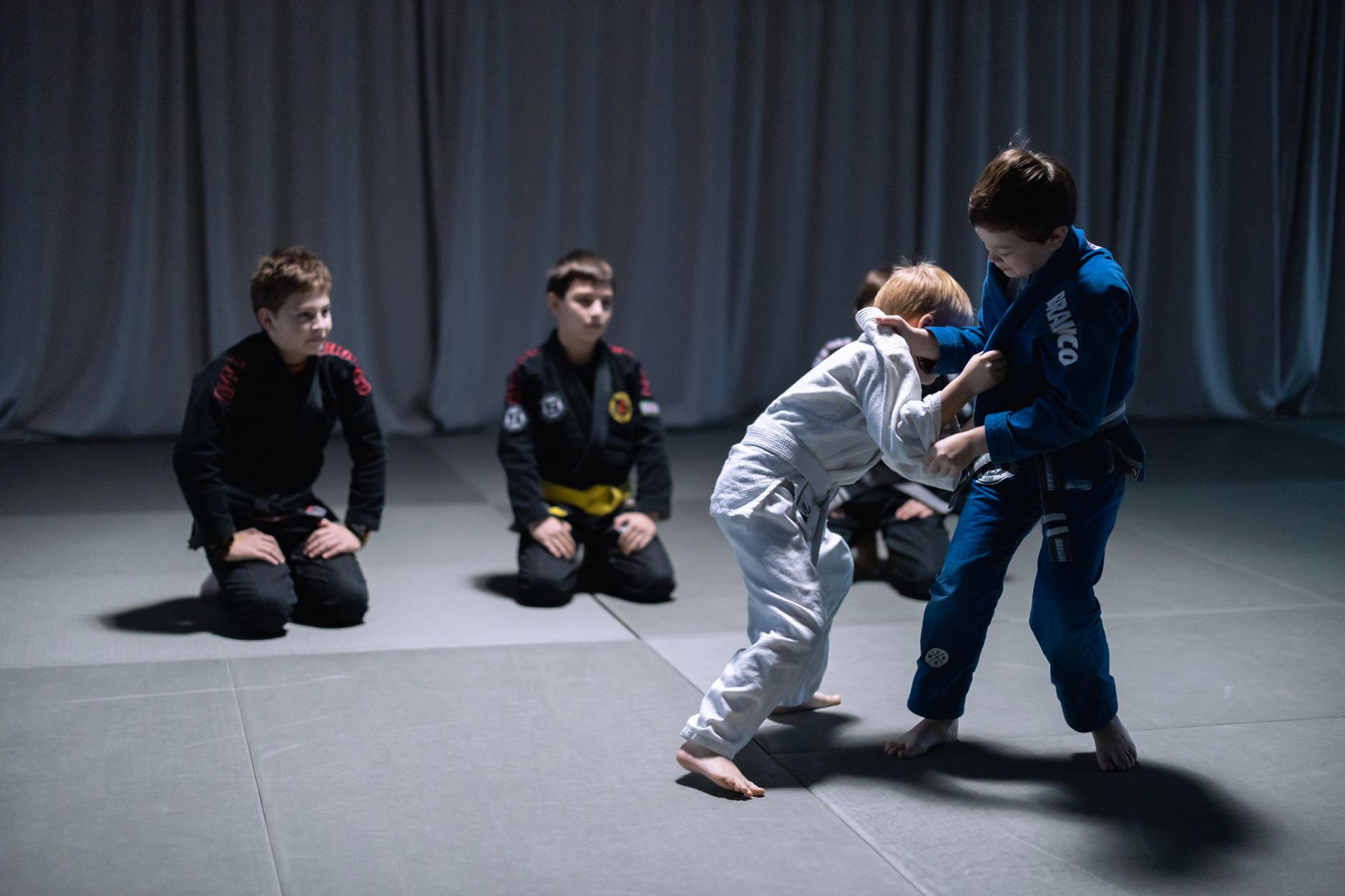
Once you are training regularly, focus on building a small set of foundational techniques before trying to learn everything at once. Jiu-jitsu basics for beginners should center on a handful of positions and transitions rather than an encyclopedic library of moves.
Here is a step-by-step framework for the core concepts every white belt should own:
- The Guard: Learn to play guard, meaning keeping an opponent between your legs when on your back. This is your default defensive position on the ground.
- Guard Passing: Learn two or three guard passes so you can get past an opponent’s legs and advance to a dominant position.
- Mount and Side Control: These are the two most common dominant top positions. Learn how to maintain them and how to escape from them when you are on the bottom.
- The Rear Naked Choke: This is the most commonly applied submission in both sport BJJ and real self-defense. Learn the mechanics early.
- The Armbar from Mount: Another foundational submission. Understanding how the armbar works also teaches you how to defend it.
- Bridging and Shrimping: These two movements are the engine of BJJ escapes. Drill them until they are automatic, because you will use them in every single roll.
Many beginners look for a jiu-jitsu techniques step-by-step PDF or jiu-jitsu videos for beginners to supplement their classroom time. That is a fine habit as long as it does not replace mat time. Videos clarify concepts you saw in class; they cannot replicate the feel of live resistance. There is no app, game, or jujutsu training game that replaces an actual partner.
Training with 1+ Martial Arts Schools in Sylmar, CA gives you access to a real community of partners who will push your technique in ways solo study never can.
The National Academy of Sports Medicine (NASM) emphasizes movement pattern training as the foundation of athletic skill development. In BJJ, that means drilling your shrimps, bridges, and guard transitions hundreds of times until they require no conscious thought during live rolling.
Step 6: Apply the 80/20 Rule and Train Smarter
The 80/20 rule in BJJ, often called the Pareto principle applied to martial arts, suggests that roughly 80 percent of your results will come from 20 percent of your techniques. Most experienced grapplers find that they win the majority of their rolls with a small, sharp set of go-to moves rather than a massive and inconsistent technique library.
For beginners, this is liberating news. Instead of trying to learn everything, focus deeply on a few techniques and drill them relentlessly. Pick one guard pass, one submission from guard, one sweep, and one escape. Get those sharp. Add more only when those first ones work consistently under pressure.
This principle also applies to how you use supplementary study. If you want to learn jiu-jitsu at home with a partner, pick one technique from class each week and drill it slowly with a training partner in your living room. No mat is required for positional drilling at low intensity. This kind of deliberate off-mat practice accelerates retention without adding injury risk.
Trying to learn jiu-jitsu at home alone, however, has real limits. You can shadow drill movements, improve your flexibility, and study technique breakdowns, but you cannot develop timing and sensitivity without a resisting partner. Use home drilling as a supplement, not a substitute for class.
Research published through Harvard Health’s exercise and fitness resources consistently shows that focused, skill-based physical training delivers greater long-term adherence and performance gains than unfocused general exercise. The 80/20 focus approach in BJJ aligns perfectly with that principle.
Step 7: Build the Discipline and Mindset That Make Beginners Into Black Belts
Technique is only part of what separates a white belt from a black belt. The other part is mindset. Brazilian jiu-jitsu has one of the highest dropout rates of any sport, with most students quitting within the first year. The ones who stay are not always the most naturally athletic; they are the ones who learn to treat failure as information.
Here are the mindset principles that matter most for beginners in Sylmar looking to go the distance:
- Show up consistently: Two to three classes per week compounds faster than six classes one week and nothing the next. Consistency beats intensity at the beginner level.
- Leave your ego at the door: You will be submitted by people smaller, older, and less athletic than you. That is part of the curriculum, not an insult.
- Ask questions: Good coaches want you to ask questions. If something from class is unclear, stay five minutes after and ask. Most instructors will happily clarify.
- Track your progress privately: Keep a small training journal. Write down what you worked on, what got you, and what felt good. Reviewing it every month shows you how far you have come even when day-to-day progress feels invisible.
- Respect everyone on the mat: From day one, bow in, bow out, shake hands before and after rolls. These habits build the character that martial arts is actually designed to develop.
This emphasis on character development, not just technique, is central to what Korean martial arts schools like Dragon Mu Sool teach under Master Nathan in Sylmar. The same principles of discipline, honor, and inner strength that drive Kuk Sool training apply directly to the long road of BJJ development. Checking out the available Tai Chi Simi Valley and broader curriculum offerings gives you a sense of how a structured program builds the whole athlete.
The American Academy of Pediatrics’ HealthyChildren resource notes that structured martial arts training builds self-regulation, respect for authority, and resilience in young students. These same benefits extend to adult practitioners who approach their training with the right mindset.
According to CDC physical activity guidelines, regular vigorous exercise like martial arts training reduces stress, improves sleep, and supports mental health. BJJ delivers all of these benefits alongside practical self-defense skill, making it one of the most complete physical activities a person in Sylmar can take up.
Things You Should Know Before Starting BJJ
A few important facts that every beginner in Sylmar should have before walking onto the mat for the first time:
- BJJ progress is slow by design. The average time to black belt is eight to twelve years of consistent training. Embrace the journey.
- Injuries are possible but largely preventable. Most beginner injuries come from not tapping early enough or rolling with reckless partners. Choose your training partners wisely and always tap.
- You will plateau. There will be weeks where nothing seems to work and you feel like you are moving backward. This is normal. Stay consistent through the plateaus.
- Cross-training helps. Wrestling, judo, and sambo all complement BJJ. If you have a chance to take a class in any of these arts alongside your BJJ training, take it.
- Nutrition and recovery matter as much as mat time. Mayo Clinic’s fitness guidance emphasizes that sleep, hydration, and balanced nutrition are non-negotiable components of any serious physical training program.
- Finding a community matters. Sylmar has a strong martial arts community. Connect with training partners outside of class to keep motivation high.
Closing: Start Your Martial Arts Journey in Sylmar Today
Brazilian jiu-jitsu is one of the most rewarding martial arts you can learn, but the first step is the hardest: walking through the door of a school and committing to the process. Whether you are a complete beginner or someone returning to the mat after a break, Sylmar has resources and communities to support your growth. If you are ready to experience the kind of structured, values-driven martial arts training that builds real skill alongside real character, Dragon Mu Sool is here for you. Ranked among THE BEST 10 Martial Arts near SYLMAR, LOS ANGELES, CA 91342, our school under Master Nathan offers a welcoming environment for students of all ages. Take the first step and contact us today for a free trial class to see what martial arts training in Sylmar can do for your life.
Frequently Asked Questions
Is 16 a good age to start BJJ?
Sixteen is an excellent age to start Brazilian jiu-jitsu. At that age, students have the physical coordination, body awareness, and mental focus to absorb technique quickly. Teenagers who begin BJJ at 16 also benefit from the discipline and confidence the sport builds during some of the most formative years of their development. Many competitive grapplers started at exactly this age or later.
What is Mark Zuckerberg’s BJJ rank?
Mark Zuckerberg earned his blue belt in Brazilian jiu-jitsu in 2023 after training consistently for about two years. He has competed in multiple tournaments and spoken publicly about how BJJ changed his relationship with physical fitness and mental focus. His path from beginner to competitive blue belt is a good reminder that BJJ is accessible to anyone willing to put in the mat time.
What is the 80/20 rule in BJJ?
The 80/20 rule in BJJ means that roughly 80 percent of your results come from 20 percent of your techniques. Most grapplers win the bulk of their rolls with a small, sharp set of go-to moves rather than a large, inconsistent library. For beginners, this means picking a few foundational techniques and drilling them deeply rather than trying to learn every submission in the first year.
How to learn Brazilian jujutsu at home?
You can supplement your mat training at home by drilling movements like shrimping, bridging, and positional flows with a willing partner. Reviewing technique breakdowns and studying jiu-jitsu basics for beginners through quality instructional content also helps reinforce what you learned in class. However, live resistance from real training partners is irreplaceable. Home drilling works best as a complement to regular classes, not a substitute for them.