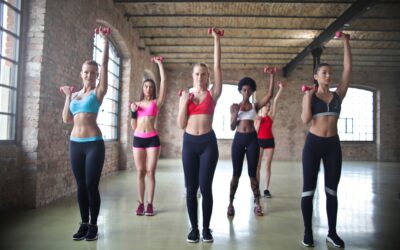
The best way to make the most of your at-home workout is to combine bodyweight strength moves with functional, martial-arts-inspired exercises that build real fitness without any equipment. A well-structured routine targeting every major muscle group can match what you get in a gym. This post walks you through 30 proven moves, tips on structuring them into a routine, and how training at a school like Dragon Mu Sool deepens the results you get from home practice.

1. Why At-Home Workouts Without Equipment Actually Work
A full body workout at home without equipment is more effective than most people expect. When you remove machines from the equation, your stabilizer muscles have to work harder, your coordination improves, and you build functional strength that carries over directly into martial arts training. According to ACE Fitness, bodyweight training consistently produces measurable gains in muscular endurance, cardiovascular fitness, and flexibility, especially for beginners and intermediate athletes.
The biggest myth is that you need a barbell or a cable machine to get strong. In Kuk Sool and Korean martial arts, practitioners develop striking power, joint resilience, and whole-body coordination almost entirely through bodyweight and partner work. That same principle applies to your living room. A workout at home without equipment is not a consolation prize. It is a legitimate training method with a long track record.
What makes these sessions work is structure. Randomly picking ten exercises is not the same as a planned routine that sequences push, pull, hinge, squat, and core patterns in a logical order. The 30 moves in this guide are organized so you can mix and match them into a complete, balanced session every time. Whether you are looking for 10 exercises at home or a longer 30-minute workout at home for beginners, you will find what you need here.
2. Key Takeaways Before You Start Your Home Training Routine
Before you jump into any at-home training routine, a few principles will save you from wasted effort and preventable injuries. These takeaways apply whether you are doing a quick 10-minute warm-up before a Kuk Sool session or a standalone 30-minute workout at home for beginners.
- Warm up first. Five minutes of light movement, joint circles, and gentle stretching prepares your connective tissue and reduces injury risk. Cold muscles do not perform well and are easier to strain.
- Control the tempo. Slow, controlled reps build more muscle and coordination than fast, sloppy ones. Count a two-second descent and a one-second hold at the bottom of every squat and lunge.
- Prioritize form over reps. One clean rep is worth ten messy ones. This is a core teaching at Dragon Mu Sool: technique first, intensity second.
- Progressive overload still applies. Add reps, reduce rest, or slow the tempo over time. Your body adapts quickly to bodyweight work, so keep pushing the difficulty.
- Rest is training. Muscles grow during recovery. Aim for at least one full rest day between intense sessions targeting the same muscle groups.
- Stay hydrated. Even a home workout without equipment can cause significant fluid loss. Drink water before, during, and after.
Check in with guidelines from the CDC Physical Activity page for general recommendations on weekly exercise volume. Adults generally need 150 minutes of moderate activity or 75 minutes of vigorous activity per week, and bodyweight training counts toward both.
3. The Bridge: Build a Powerful Foundation for Kicks and Stances
The bridge is one of the most underrated exercises in a home workout without equipment. It directly targets the glutes, hamstrings, and lower back, the three muscle groups that power every kick, stance transition, and takedown in Kuk Sool. A strong posterior chain is also your first line of defense against lower back pain, which is the most common complaint among new martial arts students.
How to do the Bridge
- Lie on your back with knees bent and feet flat on the floor, hip-width apart.
- Press your feet into the ground and drive your hips toward the ceiling until your body forms a straight line from shoulders to knees.
- Squeeze your glutes hard at the top. Hold for two seconds.
- Lower slowly and repeat for 12 to 15 reps.
Variations: single-leg bridge (lift one foot off the floor), elevated bridge (feet on a couch or chair), or bridge with a hip pulse at the top. For those following a home workout routine for women or a home workout routine for men, the bridge works identically for all bodies, so do not skip it based on gender assumptions.
4. Chair Squat: A Beginner-Friendly Lower Body Power Builder
The chair squat is the perfect entry point for anyone new to squatting with good form. Using a chair as a depth guide removes the guesswork and teaches you to sit back into the movement rather than collapsing forward. In Kuk Sool, low stances like Horse Stance and Back Stance demand serious quad and hip strength, and the chair squat builds exactly that.
How to do the Chair Squat
- Stand in front of a sturdy chair with feet shoulder-width apart and toes pointed slightly outward.
- Hinge at the hips, push your knees out, and lower yourself until your glutes just touch the seat.
- Press through your heels to stand back up. Do not fully sit down.
- Complete 10 to 15 reps, focusing on a controlled descent.
Once the chair squat feels easy, progress to a standard bodyweight squat, then a jump squat, and eventually a single-leg squat (pistol squat) for advanced home training. This exercise also appears in many beginner home workout plans for women and men as a safe starting point for knee-friendly lower body work.
5. Knee Pushup and Standard Pushup: Upper Body Strength for Strikes and Throws
The pushup is the single most effective upper body exercise you can do at home without equipment. It trains the chest, shoulders, triceps, and core all at once, and it builds the pressing strength you need to execute palm strikes, pushes, and defensive blocks in Korean martial arts. The knee pushup is the smartest starting point for beginners.
How to do the Knee Pushup
- Start in a high plank position but drop your knees to the floor. Keep your hips aligned with your shoulders, not piked up or sagging.
- Lower your chest toward the floor until your elbows reach about 90 degrees.
- Press back up with control.
- Aim for 8 to 12 reps with perfect form before moving to a standard pushup.
Pushup Progressions for Home Workouts
- Standard pushup (toes on floor, body in a straight line)
- Wide-grip pushup (targets chest more)
- Narrow-grip or diamond pushup (targets triceps more)
- Decline pushup (feet elevated on a chair, targets upper chest and shoulders)
- Pike pushup (hips high, targets shoulders, bridges toward a handstand pushup)
For anyone following workout plans for men, pushup progressions are a non-negotiable core component. The same goes for beginners of any gender starting a home routine.

6. Stationary Lunge: Single-Leg Strength for Footwork and Stability
The stationary lunge builds the single-leg strength and balance that every martial artist needs for fluid footwork, sweeping techniques, and quick directional changes. Unlike a walking lunge, the stationary version keeps your feet planted, which makes it easier to focus on form and knee alignment before adding dynamic movement.
How to do the Stationary Lunge
- Stand with feet hip-width apart. Step one foot forward about two to three feet and plant it firmly.
- Lower your back knee toward the floor, keeping your front shin vertical and your torso upright.
- Stop just before the back knee touches the ground, then press through the front heel to rise.
- Complete 10 reps on each leg.
Lunge variations to cycle into your at-home workout plan include the reverse lunge, lateral lunge, curtsy lunge, and the Bulgarian split squat (rear foot elevated). Each variation challenges your hip and knee stabilizers from a slightly different angle, which builds well-rounded lower body strength. For 30 moves to make the most of your at home workout, female or male, lunge progressions are essential.
7. Plank to Downward Dog, Forearm Plank, and Core Stability Moves
Core strength is not just about having visible abs. In Kuk Sool, a strong and stable core is what transfers force from your legs through your hips and into your techniques. Every strike, throw, and joint lock starts with core engagement. These core exercises belong in every home workout without equipment.
Forearm Plank
- Place your forearms on the floor, elbows directly under your shoulders, and form a straight line from head to heels.
- Engage your core, glutes, and quads. Do not let your hips sag or pike.
- Hold for 20 to 60 seconds. Rest and repeat for 2 to 3 sets.
Plank to Downward Dog
- Start in a high plank position with wrists under shoulders.
- Push your hips up and back into a Downward Dog, forming an inverted V shape. Press your heels toward the floor and your chest toward your thighs.
- Hold for a breath, then return to high plank.
- Repeat for 8 to 10 reps. This move trains the core, shoulders, hamstrings, and thoracic spine mobility simultaneously, which makes it one of the highest-value exercises in a 30-minute workout at home.
Additional Core Moves for Home Training
- Dead bug: Lie on your back, arms pointed at the ceiling, knees at 90 degrees. Slowly lower one arm and the opposite leg toward the floor without arching your back. Return and switch sides.
- Mountain climbers: In a high plank, drive alternating knees toward your chest at a quick but controlled pace. This doubles as a cardio drill.
- Hollow body hold: Lie on your back, press your lower back into the floor, and lift your shoulders and legs a few inches. Hold the tension. This is a gymnastics staple that transfers beautifully to martial arts body control.
8. Bird Dog and Straight-Leg Donkey Kick: Posterior Chain and Balance Training
The Bird Dog and the straight-leg donkey kick are two of the most effective exercises for building the posterior chain and improving the balance and coordination that martial arts demand. Both moves are low-impact, making them excellent choices for students recovering from minor injuries or those just beginning a home workout routine.
Bird Dog
- Start on all fours with wrists under shoulders and knees under hips.
- Extend your right arm forward and your left leg back simultaneously, keeping your hips level and your core braced.
- Hold for two seconds, return to the starting position with control, and switch sides.
- Complete 10 reps per side for 2 to 3 sets.
The Bird Dog is backed by NASM as one of the top corrective exercises for improving lumbar stability and reducing lower back pain. It also trains the anti-rotational core strength that is critical for throwing and grappling techniques in Kuk Sool.
Straight-Leg Donkey Kick
- Begin on all fours in the same starting position as the Bird Dog.
- Keeping your leg straight, raise one leg behind you until it is parallel to the floor or slightly above. Squeeze the glute hard at the top.
- Lower with control and repeat for 12 to 15 reps per side.
Combine the Bird Dog and donkey kick in a superset, alternating between them with minimal rest, to create a challenging at-home workout for the posterior chain that also trains coordination and proprioception. This combination is equally effective as a home workout for women and as a home workout for men who want to strengthen the hip extensors without loading the spine.
9. Martial Arts-Specific Moves to Add to Your Home Workout
A home workout built around Korean martial arts training goes beyond general fitness. It integrates technique repetition that builds muscle memory and real self-defense skill. These moves come directly from Kuk Sool practice and fit naturally into a bodyweight session. For more ideas on structured classes, check out group martial arts exercise ideas that can easily be adapted for solo home training.
Stance Work and Transitions
Hold a low Horse Stance for 30 to 60 seconds. Transition slowly to a Forward Stance, then a Back Stance, and then a Cat Stance. Moving between stances deliberately burns out the legs while drilling the footwork patterns you need in sparring and self-defense scenarios.
Shadow Striking Combinations
Shadowboxing is one of the highest-calorie at-home exercises that requires zero equipment. Start with a basic combination: jab, cross, low block, reverse punch. Move around your space, practice retreating and advancing, and focus on the hip rotation behind each strike. Three rounds of two minutes each, with one minute of rest between rounds, builds serious cardio and striking mechanics.
Kicking Drills
Front kicks, side kicks, roundhouse kicks, and back kicks can all be drilled at home. Use a doorframe for light balance support if needed. Focus on the chamber position (knee up, hip loaded) before extending the kick. Slow-motion kicks build more control and hip flexibility than fast, sloppy ones. Do 10 kicks per leg per technique.
Fall Breaks and Rolling
On a soft surface like carpet or a yoga mat, practice basic fall breaks (backward and sideways) and forward rolls. These drills train your body’s reaction to being taken off balance, which is one of the most important self-defense skills you can develop. Always prioritize a safe surface for these movements.
Pairing these martial arts movements with the bodyweight exercises in this list creates a home workout that doubles as a skills session, which is exactly the kind of training discussed in depth at martial arts home training resources designed specifically for Kuk Sool students.
10. How to Build a 30-Minute At-Home Workout for Beginners
A 30-minute workout at home for beginners does not need to be complicated. The key is to hit every major movement pattern in a session that leaves you energized, not destroyed. Here is a sample structure using the moves from this list that works as a complete full body workout at home without equipment.
Sample 30-Minute Beginner Home Workout
- Minutes 0-5: Warm-up. Joint circles (ankles, knees, hips, shoulders, neck), 10 leg swings per side, 10 arm circles per side, light marching in place.
- Minutes 5-10: Lower body. 3 sets of 10 chair squats, 2 sets of 10 stationary lunges per leg. Rest 30 seconds between sets.
- Minutes 10-15: Upper body. 3 sets of 8 to 12 knee pushups (or standard pushups), 2 sets of 10 pike pushups. Rest 30 seconds between sets.
- Minutes 15-20: Core. 2 sets of 30-second forearm planks, 2 sets of 10 Bird Dogs per side, 2 sets of 10 dead bugs per side. Rest 20 seconds between exercises.
- Minutes 20-25: Posterior chain and balance. 2 sets of 12 bridges, 2 sets of 12 straight-leg donkey kicks per side, 2 sets of 10 Plank to Downward Dog reps.
- Minutes 25-30: Cool-down. Standing quad stretch, seated hamstring stretch, child’s pose, cat-cow, and deep breathing.
This structure follows the movement sequencing principles recommended by organizations like Mayo Clinic Fitness, starting with larger muscle groups and compound movements before isolating smaller muscles and finishing with flexibility work. Adjust the reps and rest periods as you get stronger. For a structured fat loss plan to complement these sessions, explore the beginner fat loss workout program built around martial arts training.
11. Full Home Workout Moves List: All 30 Exercises at a Glance
Here is the complete list of 30 moves to make the most of your at home workout. Mix and match these to build sessions of any length. Every exercise works with zero equipment and can be scaled up or down based on your current fitness level. This list covers the full range for both a 30 moves to make the most of your at home workout male approach and a 30 moves to make the most of your at home workout female approach, because the moves work for every body.
Lower Body
- Chair squat
- Bodyweight squat
- Jump squat
- Pistol squat (assisted with a door handle if needed)
- Stationary lunge
- Reverse lunge
- Lateral lunge
- Bulgarian split squat
- Calf raise (single-leg for extra challenge)
- Glute bridge
Upper Body
- Knee pushup
- Standard pushup
- Wide-grip pushup
- Diamond pushup
- Decline pushup
- Pike pushup
- Tricep dip (using a chair)
- Inchworm
Core
- Forearm plank
- High plank
- Side plank
- Dead bug
- Hollow body hold
- Mountain climbers
- Bicycle crunch
Posterior Chain and Full Body
- Straight-leg donkey kick
- Bird Dog
- Plank to Downward Dog
- Burpee
- Bear crawl
These 30 moves give you everything you need for a full body workout at home without equipment. Rotate them across your training week so you never repeat the exact same session twice, which keeps your body adapting and prevents boredom. For a science-backed look at bodyweight exercise programming, ACE Fitness has excellent resources on designing balanced no-equipment routines.
12. Taking Your Home Training Further with Kuk Sool and Dragon Mu Sool
Home training is a powerful supplement, but it has a ceiling. The skills you build at home, the strength, the flexibility, the discipline of showing up consistently, all accelerate your progress in a structured martial arts program like Kuk Sool. At Dragon Mu Sool, Master Nathan’s curriculum blends physical conditioning with personal development, teaching students to carry the same focus and discipline from their home practice into every area of life.
Students at the school consistently describe it as a family, not just a gym. Children build confidence and character while learning real self-defense skills. Adults discover a training community that pushes them to grow physically and mentally. The techniques of Kuk Sool, a comprehensive Korean martial art that includes striking, joint locks, throws, and weapons work, create a depth of skill that no at-home routine can fully replicate on its own.
If you are serious about your fitness and personal growth, a martial arts school for mental resilience like Dragon Mu Sool is the natural next step beyond home training. The self-discipline you build doing pushups and planks in your living room translates directly to the focus required to master Kuk Sool technique on the mat.
Your 30-move home workout is the foundation. The school is where you build the house. Ready to find out what you are capable of? Contact us today for a free trial class and experience firsthand why Dragon Mu Sool students keep coming back, year after year, to sharpen their skills, their bodies, and their character.
Frequently Asked Questions
What is the 3-3-3 rule for workouts?
The 3-3-3 rule is a simple workout structure: 3 sets of 3 exercises, each done for 3 rounds, with short rest periods between sets. It is popular as a minimalist home workout framework because it takes under 30 minutes and can be applied to any combination of bodyweight moves. For beginners, it is a practical way to build consistency without overthinking programming.
What is the best 30-minute home workout?
The most effective 30-minute home workout combines a five-minute warm-up, compound lower body moves like squats and lunges, upper body pushes like pushups, core work like planks and dead bugs, and a five-minute cool-down stretch. Structuring the session around full body movement patterns ensures you hit every major muscle group efficiently. Martial arts drills like stance work and shadow striking can replace or supplement traditional cardio intervals.
What are the 12 exercises to do every day?
A solid daily movement practice can include: bodyweight squat, reverse lunge, glute bridge, standard pushup, Pike pushup, forearm plank, Bird Dog, dead bug, Plank to Downward Dog, mountain climbers, inchworm, and a thoracic spine rotation stretch. These 12 exercises cover every major movement pattern, require no equipment, and take about 20 minutes. Daily movement at this level supports joint health, posture, and energy, even on rest days from intense training.
What’s the most effective at home workout?
The most effective workout at home without equipment is one you do consistently. That said, research points to full body circuit training that combines strength and cardio intervals as the highest-return format for fat loss and fitness. Structuring sessions around compound moves like squats, pushups, lunges, and planks, paired with higher-intensity bursts like mountain climbers or jump squats, maximizes results per minute and requires nothing but floor space.