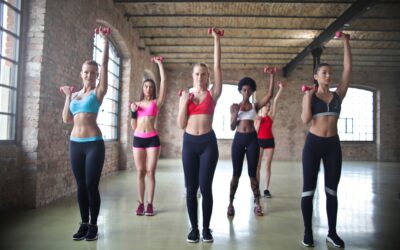
Group workout class exercises at a Korean martial arts studio include partner striking drills, bodyweight circuits, HIIT-style combinations, joint mobility flows, sparring games, and more. These activities build strength, coordination, and camaraderie all at once. This post walks through 15 specific exercise ideas for group workout classes that instructors can plug into their lesson plans today, whether classes are large or small, beginner or advanced.

1. Group Workout Class Exercises: Partner Strike and Block Drills
Partner drills are one of the most effective group workout exercises in Korean martial arts because they mirror real self-defense scenarios while building trust between classmates. In Dragon Mu Sool martial arts school, partner strike-and-block rounds are a staple. One person throws controlled punches, palm strikes, or knife-hand strikes while the partner practices the corresponding blocks and counters. Rotate partners every two minutes to keep energy high and expose students to different body types and reaction speeds.
Partner exercises demand active listening, quick reflexes, and controlled power, all at once. They are ideal group fitness activities for adults because they scale naturally: beginners work slowly and focus on form, while advanced students add speed and combination chains. According to ACE Fitness, partner-based training tends to increase workout adherence because the social accountability element keeps participants engaged longer.
Variation: have one partner hold a hand target or kicking shield so the striking student can apply full power without risk. This turns the drill into a high-intensity cardio burst while the holder works on stance stability.
2. Bodyweight Circuit Training for Martial Arts Classes
A bodyweight circuit is one of the cleanest group workout ideas with no equipment required, which makes it perfect for large classes or pop-up sessions. Structure the circuit as a series of stations: push-ups, squats, mountain climbers, plank holds, jump lunges, and burpees. Set a timer for 40 seconds of work and 20 seconds of transition. Students rotate through every station, completing the full loop two or three times depending on class length.
Bodyweight circuit training for martial arts students is especially valuable because every movement in the circuit has a direct carry-over to technique. Squats build the leg drive behind a low kick. Push-ups develop the pressing power used in grappling. Mountain climbers train hip flexor endurance needed for chamber kicks. If you want a structured template, our post on minimal-equipment group exercise workouts lays out a ready-to-use format.
This type of group fitness workout template works beautifully at the start of class as a warm-up protocol or at the end as a conditioning finisher. Either way, students leave breathing hard and feeling accomplished.
3. HIIT Combination Rounds
High-intensity interval training built around martial arts combinations is one of the most popular group exercise class ideas at studios like Dragon Mu Sool. A typical round looks like this: call out a three-strike combination (say, jab, cross, front kick), let students drill it for 20 seconds at full speed, then rest 10 seconds before calling the next combination. Run eight rounds back-to-back for a four-minute Tabata-style block.
HIIT group workout classes in a martial arts setting are more engaging than generic bootcamp formats because the combinations require mental focus alongside physical effort. Students cannot zone out when they are trying to remember a six-movement sequence. The American College of Sports Medicine notes that high-intensity interval formats consistently outperform steady-state cardio for improving cardiovascular fitness in shorter time windows, making them ideal for the 60-minute class structure most studios run.
Instructors can theme each HIIT block around a technique family: one block for hand strikes, one for kicks, one for takedown setups. This keeps the session cohesive with the broader curriculum rather than feeling like a random conditioning class bolted onto a martial arts lesson.
4. The 2-Lined Circuit for Large Group Classes
When you have 20 or more students on the mat at once, spatial management becomes a real challenge. The two-lined circuit solves it elegantly. Split the class into two parallel lines facing each other. Students at the front of each line perform the assigned drill, for example a double-leg takedown shot or a hip-throw entry, then jog to the back of the opposite line. The exercise flows continuously, and no one is standing idle.
This is one of the smartest group exercise ideas for instructors managing big classes because the format removes bottlenecks. Everyone is moving, and the short jog back to the line serves as active recovery. Our dedicated post on martial arts circuit training for big classes breaks down the setup in even more detail, including how to adjust the drill density for beginner versus advanced groups.
The 2-lined circuit can house any skill: kicks, throws, sweeps, defensive footwork patterns, or ground-level movements. Rotate the drill every three to five minutes to keep the session fresh and cover multiple technique categories in one class period.
5. Joint Mobility and Flexibility Flows for Group Sessions
Korean martial arts like Kuk Sool Won place significant emphasis on joint health and full-range-of-range movement. A structured group mobility flow is one of the exercise ideas for group workout classes that instructors most often underutilize, yet it pays enormous dividends over a training career. Lead the whole class through hip circles, shoulder rotations, spinal waves, wrist mobilizations, and ankle rolls in a synchronized sequence.
Group mobility flows work especially well at the opening of class because they raise core temperature gradually, lubricate the joints, and cue students into a focused mindset before technical work begins. They also double as a visual teaching moment: when students can see their peers moving through the same joint circles, they self-correct their own range and depth by comparison.
For classes that include children and adults together, the mobility flow is a rare equalizer. Kids tend to be naturally flexible but lack control; adults have control but limited range. Both groups benefit from the same drill, which builds a sense of shared practice that reinforces the family-oriented atmosphere Dragon Mu Sool is known for.
6. Partner Takedown and Grappling Drills
Grappling-based partner exercises are a cornerstone of any well-rounded group fitness class at a self-defense school. Pair students up by size and experience level, then cycle through controlled takedown entries: single-leg shots, hip throws, and wrist-lock takedowns drawn from the Kuk Sool curriculum. Each student takes five repetitions as the attacker, then switches roles.
These partner grappling drills develop grip strength, core stability, and spatial awareness in ways that no solo drill can replicate. They are also among the most practical group workout ideas for adults focused on real self-defense readiness. The physical challenge of actually moving another person teaches students to generate whole-body force rather than relying on isolated muscle power.
Safety is paramount. Instructors should demonstrate proper falling technique (ukemi) before any takedown drilling begins, and mat space should be distributed so each pair has a clear, unobstructed zone. Done correctly, grappling partner drills are exciting, deeply engaging, and surprisingly good cardio.
7. Strength Training Exercises with Minimal Equipment
Not every studio has a fully stocked weight room, and that is completely fine. Strength training exercises for martial arts group classes can run with almost nothing: resistance bands, a single kettlebell per student, or a handful of medicine balls are more than enough. A simple group strength circuit might include band-resisted punches, kettlebell swings, medicine ball slams, and single-leg deadlifts.
The phrase “less equipment equals more variety” holds true in a martial arts context. When students cannot default to a barbell, they are forced into more creative movement patterns that better mimic the dynamic, multi-planar demands of actual technique. A kettlebell swing, for instance, trains the same hip hinge and explosive hip extension that powers a roundhouse kick.
NASM’s training guidelines support integrating functional strength work into martial arts conditioning programs, citing improvements in both power output and injury resilience. Instructors can rotate strength stations every 45 seconds to keep the group format intact and prevent the session from feeling like a weightlifting class that happened to occur in a dojo.
8. Kicking Drills on the Heavy Bag and Focus Mitts
Few group exercise class ideas get students more fired up than a round of heavy bag work. Arrange bags in a circuit, or pair students with focus mitts, and set a timer. Students cycle through front kicks, side kicks, roundhouse kicks, and back kicks with proper chamber and extension. Holding mitts for a partner is itself a workout: the holder must brace, absorb, and reposition constantly.
Kicking drills are high-calorie group workout exercises that simultaneously train balance, hip mobility, and leg power. They are among the most requested fitness class ideas by students of all ages because they are genuinely fun and produce a visible, satisfying result: the thud of a well-placed kick is immediately rewarding.
Structure the rounds like sparring intervals: 90 seconds on, 30 seconds rest, switching roles between kicker and mitt holder. Run four to six rounds per pairing before rotating partners. Want more structured ideas for blending individual skill work with group energy? Our overview of fun and effective group workout ideas for martial arts students covers additional drill formats worth bookmarking.
9. Yoga and Pilates-Inspired Core Work for Martial Artists
Group yoga and Pilates-inspired sequences have a natural home in a Korean martial arts studio because core stability and breath control underpin every technique. A 10-minute block of plank variations, dead bugs, bird dogs, and hollow body holds gives students a core workout that translates directly into tighter, more controlled techniques on the mat.
Yoga-inspired group exercise ideas are also excellent recovery tools. Schedule them on days after heavy sparring or testing sessions when students need movement without additional tissue stress. Practicing these flows as a group synchronizes breathing, which has a measurable calming effect on the nervous system and helps students transition into focused technical drilling more readily.
For children’s classes in particular, Pilates-based core exercises help build the body awareness and postural control that make learning complex Kuk Sool forms significantly easier. The American Academy of Pediatrics supports structured physical activity that develops coordination and balance in young students, and these flows check every box.
10. Sparring Games and Controlled Randori
Structured sparring games turn free practice into a targeted group workout activity. Try “touch-point sparring,” where a point is scored each time a student makes light contact with a designated target zone. Or run “king of the mat” rounds where the winner stays on and the next student in line rotates in. These formats generate intense, short bursts of effort separated by brief observation periods.
Controlled randori (free practice within rules) is one of the most effective group fitness activities for adults in a martial arts setting because it integrates everything learned in the session: technique, timing, distance management, and composure under pressure. It also reveals gaps that partner drills sometimes hide, because a cooperative partner and a resisting opponent behave very differently.
Keep safety rules explicit and reinforce them before every sparring game. Light contact only, no head contact for beginners, and always a clear stop signal. Within those guardrails, sparring games produce some of the highest-energy, most memorable moments in any group workout class.
11. Self-Defense Scenario Drills
One of the most practical group exercise ideas for a self-defense studio is the scenario drill. Set up a realistic situation: a grab from behind, a wrist grab, a push, or a choke attempt. Walk through the response technique as a class, then break into pairs and drill it. Rotate so every student both applies and defends the scenario.
Scenario drills are among the best fitness class ideas for instructors because they make the purpose of every technique crystal clear. Students stop thinking “I am doing a squat” and start thinking “I am building the hip drive I need to escape a clinch.” That context shift is motivating in a way that generic conditioning rarely achieves.
They also reinforce the personal development side of Dragon Mu Sool’s curriculum. Practicing calm, decisive action under simulated stress builds mental discipline alongside physical skill. Students who train with Master Nathan at Dragon Mu Sool experience this integration of mind and body as a consistent thread through every class, not just a marketing phrase.
12. Group Form (Hyung) Practice
Practicing forms as a group is one of the most distinctly Korean martial arts group workout class activities you can run. A form, called a hyung in Korean, is a choreographed sequence of techniques performed solo but done here in unison as a class. When 15 students execute the same form together, the visual synchrony is powerful and the collective energy is palpable.
Group form practice improves memorization through repetition, refines technique through peer observation, and builds a shared sense of identity within the class. Instructors can break a form into small segments and drill each section before running the full sequence, which turns form practice into both a skill-building and conditioning exercise simultaneously.
For a broader look at how group sessions compare to solo training in terms of skill development and motivation, our article on group fitness classes versus solo training for martial artists is a great next read.
13. Agility Ladder and Footwork Drills
Agility ladder drills translate directly into the quick, precise footwork demanded by Korean martial arts. Set up several ladders in parallel so multiple students can drill simultaneously. Patterns include single-leg hops, lateral shuffles, in-in-out-out sequences, and crossover steps. Run each pattern for 15 to 20 meters, then jog back and repeat.
These group workout exercises require zero sparring contact, which makes them perfect for warm-up rotations or for classes that mix very different skill levels. A brand-new student and a black belt can both use the same ladder drill productively; the beginner focuses on coordination while the advanced student focuses on explosive speed.
Footwork agility work is often one of the more underrated group exercise class ideas because it does not look as dramatic as kicking or grappling. But superior footwork is what separates students who land techniques from those who get countered. Investing class time here pays compounding returns across every other skill category.
14. Team Challenge Relays
Team relays inject friendly competition into the group workout class format and are fantastic for building the community culture that defines Dragon Mu Sool. Divide the class into two or three teams. Each relay leg might involve sprinting to a cone, performing five burpees, executing a specific technique on a pad, then tagging the next teammate. First team to complete all rounds wins.
Team challenge relays are among the most enjoyable group exercise ideas for children’s classes, but adults love them too. The competitive element naturally pushes everyone to higher effort levels than they would sustain alone, and the teamwork component reinforces the values of respect, encouragement, and shared purpose that anchor the Dragon Mu Sool curriculum.
Instructors can theme the relay around a current technique focus: if the class has been working on front kicks this week, make the relay technique a front kick on the pad. The conditioning and the skill work become inseparable, which is exactly where group fitness for martial arts is at its best.
15. Cooldown Flow with Breath Work and Stretching
A structured cooldown is one of the most overlooked exercise ideas for group workout classes, but it is just as important as the warm-up. Lead the class through five to eight minutes of slow, deliberate stretching targeting the hips, hamstrings, shoulders, and spine. Pair each stretch with guided breath cues: inhale to lengthen, exhale to deepen the stretch.
Finishing class as a group with intentional breath work and stretching reinforces the discipline and mindfulness that Korean martial arts training is built on. It also signals a clear transition out of combat mode, which helps the nervous system downregulate and speeds recovery. Harvard Health’s exercise and fitness resources consistently highlight the value of post-exercise flexibility work for injury prevention and long-term athletic longevity.
For variety, incorporate partner stretches in the cooldown: seated back-to-back twists, standing shoulder stretches, or assisted hip openers. These bring the same partner dynamic from the main workout into the recovery phase, ending the session on a cooperative, connected note that students carry with them until the next class.
Running a dynamic, well-structured group workout class is one of the most effective ways to grow a martial arts school. The 15 group exercise class ideas above give instructors a rotating menu of drills, circuits, games, and flows that keep students challenged, motivated, and progressing month after month. Whether you are building a group fitness workout template from scratch or refreshing a session that has grown stale, mixing and matching these ideas will keep every class feeling fresh. To learn more about the full range of group formats available, check out our breakdown of the different types of workout classes at a Korean martial arts studio.
If you are ready to experience a group workout class that blends real Korean martial arts technique with genuine community, we invite you to contact us today for a free trial class at Dragon Mu Sool. Come see why students across the Aiken, SC and Augusta, GA areas call this school their second family. Master Nathan and the entire Dragon Mu Sool team are ready to welcome you to the mat.
Frequently Asked Questions
What are good exercise ideas for group workout classes with no equipment?
Bodyweight circuits, HIIT combination rounds, partner strike-and-block drills, agility footwork patterns, and group form practice all require zero equipment and deliver a full workout. At a Korean martial arts studio, even a sparring game or scenario drill needs nothing more than open mat space and willing partners. These formats work just as well for large groups as they do for smaller sessions.
How do I structure a group fitness workout template for a martial arts class?
A reliable template runs: 5 to 8 minutes of joint mobility warm-up, 10 to 15 minutes of technique drilling or partner work, 15 to 20 minutes of circuit or HIIT conditioning tied to those techniques, 10 minutes of sparring games or scenario practice, then 5 to 8 minutes of cooldown stretching. Adjust blocks based on class duration and student level. Consistency in structure helps students know what to expect and focus on effort rather than logistics.
What group workout class ideas work best for adult beginners in martial arts?
Adult beginners respond especially well to bodyweight circuits, partner drills at controlled speed, and self-defense scenario exercises. These formats provide an immediate sense of purpose and progress without requiring extensive prior knowledge. Pairing beginners with patient intermediate students during partner drills also accelerates learning. Group form practice, done slowly with instructor guidance, is another ideal entry point for new adult students.
How many students can a group exercise class effectively handle in a martial arts studio?
Most martial arts studios run effective group classes with 8 to 25 students. Below 8, the group energy can feel flat. Above 25, spatial management and individual feedback become difficult without assistant instructors. The 2-lined circuit format handles larger groups well, keeping everyone moving without crowding. For very large classes, splitting into skill-level subgroups supervised by senior students is a practical solution.
Are group workout classes at a martial arts school suitable for children?
Yes, with age-appropriate modifications. Children thrive in group formats that include team relays, mobility flows, light partner drills, and form practice. The social element of group exercise class activities naturally motivates kids to push harder and stay engaged. Korean martial arts schools like Dragon Mu Sool design children’s group classes to balance physical conditioning with character development, making the workout experience both educational and genuinely fun.