If you get injured training martial arts, stop activity immediately, assess the severity, and apply the RICE method (Rest, Ice, Compression, Elevation) for minor injuries. Seek medical attention for anything more serious. Recovery success depends on how quickly and correctly you respond in those first hours and days. This guide walks Simi Valley martial artists through every step, from the moment of injury to safely returning to the mat.
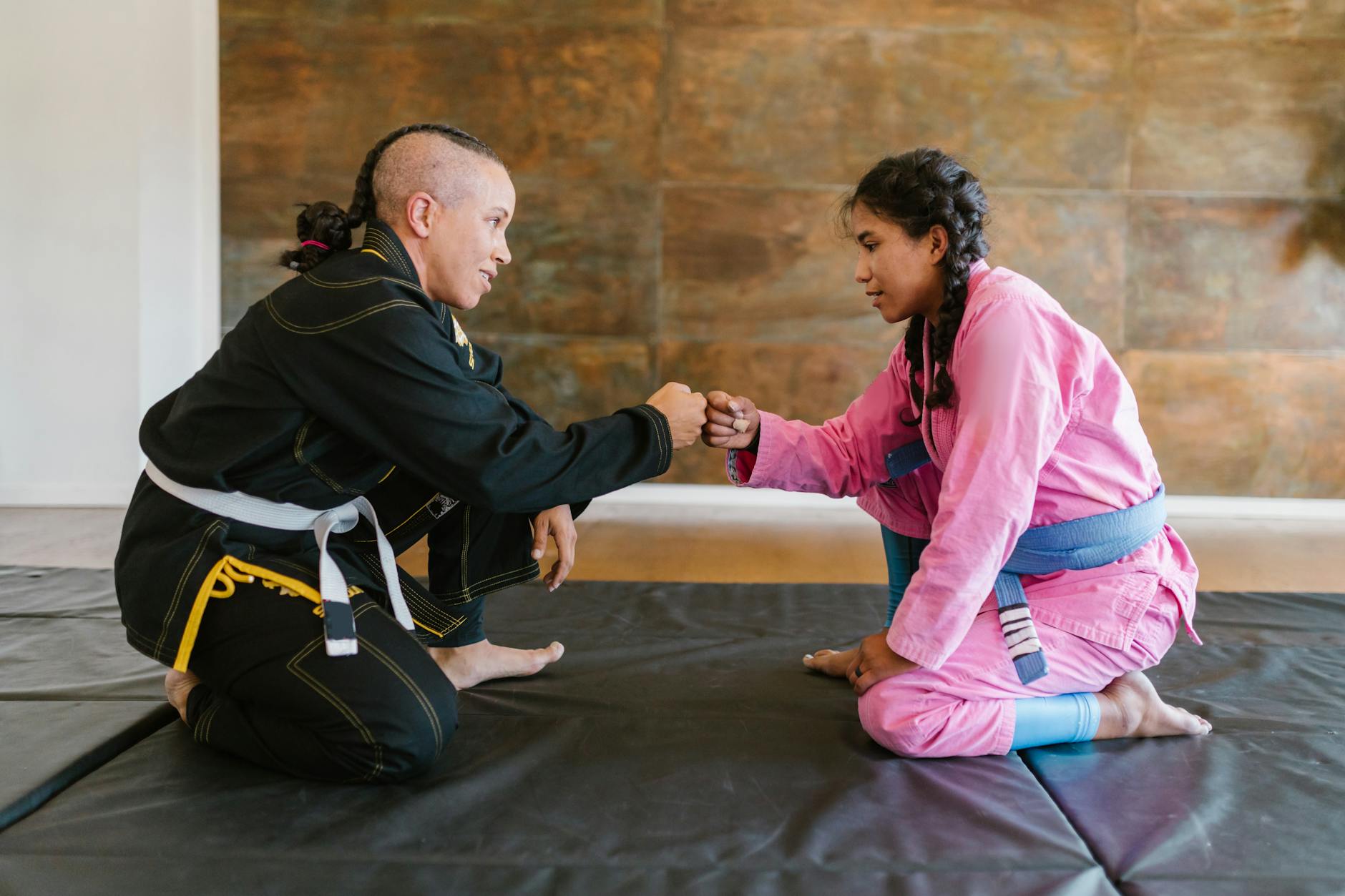
At Dragon Mu Sool, a Korean martial arts and self-defense studio here in Simi Valley, we take student safety seriously. Whether you are a child just starting out or an adult who has been training for years, injuries can happen in any physical discipline. Knowing how to handle them well is just as important as knowing how to throw a proper technique. If you have ever searched for Simi Valley Jiu Jitsu or any martial arts class nearby, you have probably wondered what happens if someone gets hurt. This post gives you real, practical answers.
1. Stop Training Right Away and Assess the Injury
The number one rule when you get injured during martial arts training is simple: stop. Do not push through it. Training through pain is one of the most common ways a minor martial arts injury becomes a serious one. Whether it is a sprained wrist from a wrist lock, a rolled ankle during footwork drills, or a strain from a throw, your body is telling you something important.
Once you stop, take a moment to assess what happened. Can you move the injured area without sharp pain? Is there swelling forming quickly? Did you hear a pop or snap? These details matter when you talk to a coach or medical professional. Mild soreness from exertion is different from acute pain at a specific joint or muscle. Learning to tell the difference is a skill every martial arts student should develop. Mayo Clinic’s fitness guidance is clear that ignoring acute pain during exercise consistently leads to longer recovery times and greater tissue damage.
At Dragon Mu Sool, our instructors are trained to spot when a student is favoring one side or moving with compensation. We pause class, check on the student, and make sure no one feels pressured to keep going when their body is saying stop. That culture of safety is part of what makes martial arts training in Simi Valley at our school different from just showing up to a workout.
2. Apply the RICE Method for Minor Martial Arts Injuries
For soft tissue injuries like sprains, strains, and mild bruising from martial arts training, the RICE method is your immediate first response. Rest, Ice, Compression, and Elevation have been a cornerstone of acute sports injury care for decades, and they remain effective for the kinds of contact and movement injuries common in a martial arts class.
- Rest: Get off the injured area. Sit or lie down. Do not test it by walking around to “see if it loosens up.”
- Ice: Apply ice wrapped in a cloth (never directly on skin) for 15 to 20 minutes. This reduces swelling and numbs pain in the injured tissue.
- Compression: Use an elastic bandage to gently wrap the area. This limits swelling without cutting off circulation.
- Elevation: Raise the injured limb above heart level when possible to help reduce fluid buildup.
This approach works well for ankle sprains, wrist injuries, and minor knee strains, which are among the more common injuries in Kuk Sool and other Korean martial arts. The RICE method handles the immediate aftermath, but it is not a substitute for a proper medical evaluation if pain persists beyond 24 to 48 hours or if swelling is significant. ACE Fitness recommends treating any injury that does not improve within 48 hours as a reason to see a healthcare provider.
3. Know When to See a Doctor After a Martial Arts Injury
Not every bump or bruise needs a trip to urgent care. But some martial arts injuries absolutely do, and waiting too long is one of the biggest mistakes students make. Knowing when to see a doctor after a training injury is a critical part of responsible practice.
Go to a medical professional immediately if you experience any of the following after a martial arts training injury:
- A pop, snap, or crack sound at the time of injury
- Rapid, significant swelling around a joint
- Inability to bear weight or use the affected limb
- Numbness, tingling, or weakness that radiates from the injury site
- Deformity or unnatural angle in a limb or joint
- Head impact with confusion, nausea, or a headache that builds over time
Head injuries deserve special mention. In any martial art that involves sparring, falls, or contact drills, a head impact should always be taken seriously. AAP HealthyChildren provides clear guidelines on concussion recognition that apply to youth martial arts students as well as adults. If in doubt, sit out and get evaluated.
When you train at Cal Coast Martial arts or any reputable school in the area, the expectation is that instructors prioritize student health over getting more mat time in. At Dragon Mu Sool in Simi Valley, we always encourage students and parents to seek medical clearance before returning to the floor after any significant injury.
4. Communicate With Your Instructor About Your Injury
One of the most overlooked steps in recovering from a martial arts injury is having an honest conversation with your instructor. Students sometimes feel embarrassed or afraid that talking about an injury will get them sidelined too long. In reality, open communication with your coach is what makes a smart, safe return possible.
Your instructor needs to know the nature of your injury so they can modify your participation appropriately. In Kuk Sool training, there is almost always something productive you can do even while recovering, whether that is watching technique demonstrations, working on breathing, or doing supervised light movement that does not stress the injured area. A good martial arts instructor treats the whole student, not just the technique.
Master Nathan and the team at Dragon Mu Sool are known in the Simi Valley community for exactly this kind of personal attention. Reviewers consistently note that the instructors are genuinely invested in each student’s growth and wellbeing, not just their progress through the curriculum. That means if you walk in with a wrapped knee or a sore shoulder, you will get a modified plan, not a dismissal.
If you have been searching for Jiu Jitsu Simi Valley style schools that care about your individual experience, this approach to injury communication is something to look for in any school you consider joining.
5. Follow a Structured Return-to-Training Plan After Injury
Returning to martial arts training after an injury is not a light switch you flip on when the pain stops. A structured return-to-training plan protects the healing tissue from re-injury and rebuilds your confidence on the mat at the same time. Rushing back too soon is the leading cause of repeat injuries in martial artists.
A sensible return-to-training plan after a martial arts injury typically follows this progression:
- Phase 1 (Recovery): Rest, manage inflammation, follow medical guidance, and maintain mental connection to training through observation.
- Phase 2 (Rehabilitation): Light mobility and flexibility work cleared by a medical professional. No resistance or contact.
- Phase 3 (Conditioning): Rebuild general fitness without stressing the injured area. Cardio, core work, and technique visualization.
- Phase 4 (Technical Return): Return to non-contact drilling and technique practice at reduced intensity with instructor oversight.
- Phase 5 (Full Return): Resume full participation including sparring or contact drills only after pain-free completion of Phase 4.
This phased approach is consistent with recommendations from NASM, which emphasizes progressive loading and movement specificity when reintroducing athletes to their sport after injury. Moving too fast through phases is a common pitfall, and having an instructor who knows your history keeps you accountable.
The class schedule at Dragon Mu Sool is structured so that students at all stages of their training journey can find appropriate participation levels. Returning students are never just thrown back into the deep end.
6. Use Injury Recovery Time to Strengthen Your Mental Game
Time off the mat does not have to mean time away from martial arts development. One of the most powerful aspects of Kuk Sool and Korean martial arts in general is the emphasis on mental discipline alongside physical skill. Injury recovery is actually an ideal time to work on the mental side of your practice.
Students recovering from a martial arts injury can use their time to:
- Watch class from the sidelines and absorb technique details they normally miss when participating
- Study the philosophy and history of Kuk Sool, which is rich in concepts around perseverance and inner strength
- Practice breathing techniques and meditation, which are part of the Dragon Mu Sool curriculum
- Work on flexibility in non-injured areas to return to training better prepared than before
- Review their goals and recommit to their personal development path
Dragon Mu Sool’s curriculum places discipline, respect, honor, and inner strength at the center of training. An injury is not a detour from that path; it is a real-world test of those very principles. Students in Simi Valley who come back from an injury having spent the recovery period working on their mental game often return sharper and more focused than before.
Harvard Health’s research on exercise and fitness has shown that mental rehearsal and visualization during physical recovery can help maintain neural pathways related to movement, meaning the mind-body connection you build in martial arts does not have to go completely dormant during downtime.
7. Prevent Future Injuries With Proper Warm-Up and Technique
Injury prevention in martial arts starts well before you step onto the mat for a training session. The two biggest contributors to preventable training injuries are inadequate warm-up and sloppy technique. Both are fully within your control.
A proper warm-up for martial arts training should include:
- 5 to 10 minutes of light cardiovascular movement to raise core body temperature
- Dynamic stretching of the hips, shoulders, ankles, and wrists, the joints most used in Kuk Sool
- Progressive intensity, starting slow and building toward training pace
- Mental preparation and focus before beginning technique work
Technique matters just as much. Poor form on a joint lock, an uncontrolled fall, or sloppy footwork during kicking drills puts the body in positions it was not designed to absorb. This is one reason why learning martial arts at a structured school under a qualified instructor is dramatically safer than learning from informal sources. Proper technique is injury prevention.
The martial arts programs at Dragon Mu Sool are designed with progressive skill-building in mind. Students do not move to more demanding techniques until they have demonstrated the foundation skills safely. That progression is not just about rank; it is about protecting your body over a lifetime of training. The NSCA consistently highlights that structured, progressive programming is among the most effective tools for reducing sport-related injury rates.
Simi Valley students who train consistently and correctly at Dragon Mu Sool build the body awareness and movement quality that makes serious injuries far less common over time. Martial arts is a long game, and taking care of your body is how you stay in it.
8. Understand Your Rights and Documentation as an Injured Martial Arts Student
If you are injured while training at a martial arts school, it is worth understanding some basic practical steps around documentation and communication, separate from the physical recovery process. This is especially relevant for adults training at a studio that carries liability waivers and insurance, as most reputable schools do.
Here is what you should do from a documentation standpoint after a training injury:
- Report the injury to the school the same day it happens, even if it seems minor at the time
- Write down what happened, when it happened, and who witnessed it
- Keep records of any medical visits, diagnoses, and treatment costs related to the injury
- Review the liability waiver you signed when enrolling to understand what is covered
- Ask the school about their incident report process
For adults who are injured during a work-related martial arts or self-defense training session (for example, law enforcement officers or security professionals training on company time), workers’ compensation rules may apply. In California, injuries sustained during employer-directed training sessions are generally covered under workers’ comp. Documentation from day one is critical in those situations.
At Dragon Mu Sool, our Simi Valley studio maintains a welcoming, family-oriented environment where safety protocols are taken seriously. We document incidents and communicate openly with students and parents so everyone knows exactly what happened and what steps are being taken.
For students looking for a Paragon Simi Valley level of professionalism in their martial arts school, this kind of transparency and accountability in how injuries are handled is a sign of a school you can trust.
Closing: Get Back on the Mat Stronger
Getting injured during training is frustrating, but it does not have to derail your martial arts journey. The students who come back strongest from injuries are the ones who take each step seriously: stopping right away, getting the right care, communicating with their instructor, following a smart return plan, and using recovery time to grow in other ways. Every one of those steps is something the Dragon Mu Sool community in Simi Valley supports fully. If you are ready to train at a school where your safety and personal development matter as much as your technique, we would love to meet you. Visit us at American Martial Arts Academy Simi Valley or contact us today for a free trial class and experience the difference a truly supportive martial arts community makes.
Frequently Asked Questions
What not to say to Workmans Comp?
Avoid minimizing your injury or saying things like “I feel fine” or “it was my fault” when speaking with a workers’ comp representative. Do not guess at causes or exaggerate either. Stick to factual descriptions of what happened, when it happened, and what symptoms you are experiencing. Inconsistent statements are the most common reason legitimate claims run into problems.
How to start training after injury?
Start training after a martial arts injury by getting medical clearance first. Then follow a phased return: begin with light movement and mobility work, progress to non-contact drilling, then resume full participation only when the injured area is pain-free under load. Always communicate with your instructor about your limitations so they can modify your training appropriately during each phase of recovery.
Who is eligible for the SJDB voucher?
The Supplemental Job Displacement Benefit voucher in California is available to workers injured on the job who have a permanent partial disability and whose employer does not offer modified or alternative work within 60 days of a disability rating. It provides up to a set dollar amount for retraining or skill enhancement at approved schools. Eligibility is determined through the workers’ compensation claims process.
How long does a typical martial arts injury take to heal?
Healing time depends on the type and severity of the injury. Minor sprains and strains often resolve in one to three weeks with proper rest and care. Ligament tears, stress fractures, or more complex injuries can take several months and may require physical therapy. Always follow your doctor’s timeline rather than pushing back before you receive medical clearance, especially for joint injuries common in martial arts.
Can children return to Kuk Sool training after an injury in Simi Valley?
Yes, children can return to Kuk Sool training after an injury as long as they have medical clearance and their instructor is informed of any restrictions. At Dragon Mu Sool in Simi Valley, we work closely with parents to create a modified participation plan for young students recovering from injuries so they stay connected to the class and their peers while healing safely.