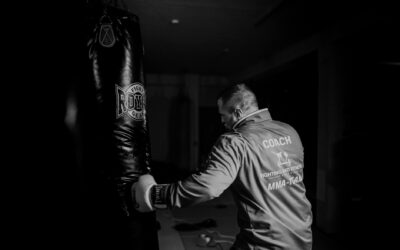
A complete weightlifting program for beginners in martial arts training combines foundational strength exercises with the movement patterns most useful for Korean martial arts like Kuk Sool. Beginners should start with bodyweight and light resistance work two to three times per week, focusing on form before adding load. This guide walks through every phase, from setting goals to building a weekly schedule that supports your practice on the mat.

Why Strength Training Supports Korean Martial Arts for Beginners
If you have ever watched a Kuk Sool demonstration and wondered how practitioners generate that kind of explosive power, the answer is rooted in functional strength. A beginner weightlifting program for martial arts is not about building bulk. It is about developing the muscular foundation that makes your throws, strikes, and joint locks more controlled and effective.
Strength training improves bone density, joint stability, and neuromuscular coordination, all of which translate directly to performance on the mat. ACE Fitness notes that resistance training produces measurable gains in functional movement quality within just six to eight weeks for untrained adults, which is exactly the window a new martial arts student is working in. When your muscles can hold a stance under load, they can hold it under the pressure of a live technique drill too.
At a family-friendly martial arts school like Dragon Mu Sool, the philosophy is that physical training and personal development grow together. Strength work is not separate from your values on the mat. The discipline you practice in the weight room, showing up when you are tired, focusing on one rep at a time, reinforces the same discipline Master Nathan teaches through Kuk Sool every single class.
Setting Goals for a Beginner Weightlifting Schedule
Before you lift a single plate, you need a clear picture of what a beginner weightlifting schedule should accomplish for a martial arts student. Your goal is not a powerlifting total. Your goal is a body that moves well, resists injury, and recovers fast enough to keep training.
Start by identifying your current weak points. Many beginners who come to Dragon Mu Sool family martial arts find that their posterior chain (the glutes, hamstrings, and lower back) is underdeveloped from years of sitting at desks. Others struggle with grip strength or shoulder stability. A good beginner weightlifting schedule targets those gaps first rather than copying a generic bodybuilding plan.
The National Academy of Sports Medicine (NASM) recommends that beginners spend at least four weeks in a stabilization phase before progressing to heavier strength work. This means lighter loads, higher repetitions (12 to 20), and a focus on balance and joint control. For a martial artist, this phase is especially valuable because it reinforces the proprioceptive awareness you need when your body is moving in unpredictable directions during sparring or technique practice.
Write your goals down. A simple three-month target might look like this: complete a full squat below parallel, perform five strict pull-ups, and hold a plank for 60 seconds. Those are realistic, measurable markers that directly support your progress in Kuk Sool.
Core Exercises in a Beginner Strength Training Plan for Martial Arts
A beginner strength training plan for martial arts revolves around compound movements. These are exercises that recruit multiple muscle groups at once, which mirrors the way the body actually works when executing a technique. Isolation exercises have their place, but they come later.
Here are the core lifts every new martial arts student should learn:
- Goblet Squat: Holding a kettlebell or dumbbell at chest height, this squat variation teaches upright posture and hip mobility simultaneously. It transfers directly to the low stances used in Kuk Sool forms.
- Romanian Deadlift: A hip-hinge pattern that strengthens the hamstrings and glutes. Powerful hip extension is the engine behind every throw and takedown in Korean martial arts.
- Dumbbell Row: Builds back thickness and grip strength, both critical for grappling techniques and weapon forms.
- Push-Up Progression: Start with incline push-ups if needed and progress to standard and then weighted push-ups. Pushing strength supports strikes and post-fall recovery.
- Pallof Press: A cable or band exercise that trains rotational core stability. Rotational power and control are the foundation of virtually every Kuk Sool movement.
- Farmer’s Carry: Walk a set distance carrying heavy dumbbells. Simple, brutal, and highly effective for grip, posture, and total-body tension.
Run this beginner strength training plan two to three times per week with at least one rest day between sessions. Keep the total session time under 45 minutes so you have energy left for your actual martial arts class.

Weekly Workout Routine for Beginners Who Train Martial Arts
Building a weekly workout routine for beginners requires balancing strength sessions with your mat time. If you are attending Kuk Sool classes three times per week, you cannot also lift heavy six days a week. Recovery is where adaptation happens, and skipping it is the fastest route to burnout or injury.
Here is a sample weekly structure that works well for students at a Korean martial arts school:
- Monday: Martial arts class (60 min)
- Tuesday: Strength session A (40 min), squat, row, core work
- Wednesday: Martial arts class (60 min)
- Thursday: Active recovery, light stretching, joint mobility
- Friday: Martial arts class (60 min)
- Saturday: Strength session B (40 min), deadlift, push, carry
- Sunday: Full rest
This weekly workout routine for beginners keeps total training volume manageable while still delivering enough stimulus for measurable strength gains. Adjust based on how you feel. If Wednesday’s class leaves your legs feeling like concrete, shift the Saturday session to a lighter load that week.
According to guidelines from the American College of Sports Medicine (ACSM), beginners should aim for 48 to 72 hours of recovery between sessions targeting the same muscle groups. That built-in buffer is exactly why the schedule above alternates martial arts days with lifting days rather than stacking them.
Progressive Overload and How to Advance Your Lifting Program
Progressive overload is the principle that your body only adapts when you gradually increase the demand placed on it. For a beginner lifting program, this does not always mean adding weight. You can progress by adding one more repetition per set, reducing rest time between sets, slowing down the lowering phase of the lift, or improving your range of motion.
A practical rule of thumb for beginners: once you can complete all sets and reps of an exercise with solid form and without straining, increase the load by the smallest increment available, usually 2.5 to 5 pounds. Do not chase numbers. A 135-pound deadlift with perfect hip hinge mechanics is worth far more to a Kuk Sool student than a sloppy 185-pound pull.
Track your sessions in a simple notebook or phone app. Write down the exercise, the weight, the sets, and the reps. Review it every two weeks. If the numbers are not moving, examine your sleep and nutrition before adding more volume. Most beginner plateaus are lifestyle issues, not programming issues.
Injury Prevention Tips for New Lifters in Martial Arts Classes
Injury prevention for new lifters starts with honesty about your current mobility and coordination. The two most common mistakes beginners make in a weightlifting program are loading a movement before they have the range of motion to perform it safely, and skipping warm-up because they feel fine.
Before every strength session, spend five to eight minutes on a dynamic warm-up. Hip circles, leg swings, thoracic rotations, and band pull-aparts are all useful. This is especially important if you are training before a martial arts class, because tight hips or stiff shoulders will limit your technique on the mat.
Pay close attention to your lower back during any hinging or squatting movement. A rounded lower back under load is a red flag. If you cannot maintain a neutral spine in the bottom of a squat, elevate your heels slightly on a small plate until your ankle mobility improves. Work on ankle and hip mobility daily, even for just five minutes, and that fix usually takes care of itself within a few weeks.
For guidance on age-specific considerations, particularly for younger students who train alongside parents at Dragon Mu Sool, AAP HealthyChildren provides clear guidelines on resistance training for children and adolescents that parents and coaches should review.
How Kuk Sool Training Complements a Beginner Weightlifting Program
One of the unique advantages of training at a Korean martial arts school is that your mat sessions already include a significant amount of functional physical work. Kuk Sool practice involves falls and rolls that train total-body tension, joint locking techniques that develop grip and wrist strength, and forms that build balance and body awareness in ways no barbell exercise can replicate.
This means your beginner weightlifting program does not need to cover everything. It fills the gaps. The weight room builds the raw horsepower. Kuk Sool teaches you how to use it. Students who combine both consistently tend to plateau less often, stay healthier, and advance through their belt curriculum with noticeably more physical confidence than students who only do one or the other.
Master Nathan’s approach at Dragon Mu Sool emphasizes that physical training is a vehicle for personal development. The grit it takes to push through the final set of a heavy farmer’s carry is the same grit that helps a student stay focused during a demanding belt test. The two practices feed each other in ways that are hard to see from the outside but become obvious once you are living them.
Ready to put your new strength to work on the mat? Contact us today for a free trial class at Dragon Mu Sool and see how Korean martial arts training and smart physical conditioning come together in one welcoming, family-oriented environment. Whether you are completely new to fitness or already have some lifting experience, our team is ready to meet you where you are and help you grow.
Frequently Asked Questions
Can beginners do weightlifting and martial arts at the same time?
Yes, and the combination is highly effective. The key is managing total training volume so recovery is not compromised. Most beginners do well starting with two strength sessions per week alongside two to three martial arts classes. As your body adapts over six to eight weeks, you can gradually add more. Prioritize sleep and nutrition to keep up with the increased demand.
How many days a week should a beginner lift weights?
Two to three days per week is the standard recommendation for beginners. This frequency provides enough stimulus for meaningful strength gains while allowing adequate recovery time. For martial arts students, fitting strength sessions on days between classes rather than on the same day tends to produce better results and keeps energy levels higher during technique practice.
What lifts are best for martial arts strength training?
Compound movements are most valuable. Squats, deadlifts, rows, pressing exercises, and loaded carries should form the core of any martial arts strength training program. These movements build total-body strength and coordination that transfers directly to the mat. Isolation exercises like bicep curls can be added later but should not be the focus for beginners.
How long does it take to see results from a beginner weightlifting program?
Most beginners notice improved strength and body composition within four to six weeks of consistent training. Neurological adaptations, meaning your nervous system learning to recruit muscle fibers more efficiently, happen first. Visible muscle changes follow over the next few months. Consistency, adequate protein intake, and quality sleep are the three factors that most reliably predict how quickly results appear.
Is weightlifting safe for kids who train in martial arts?
Resistance training is safe for children when supervised properly, focused on bodyweight and light loads, and built around learning movement patterns rather than maxing out weight. The AAP supports youth resistance training with appropriate coaching and programming. At Dragon Mu Sool, younger students develop functional strength through the physical demands of Kuk Sool itself, which is an excellent foundation before introducing external weights.