Training harder without getting injured comes down to smart programming, body awareness, and consistent recovery habits. In Korean martial arts, pushing your limits is part of the journey, but doing it recklessly leads to setbacks that steal months of progress. This post walks through nine practical strategies that keep Simi Valley martial artists moving forward safely, whether you are a beginner stepping onto the mat for the first time or a seasoned student chasing your next belt rank.
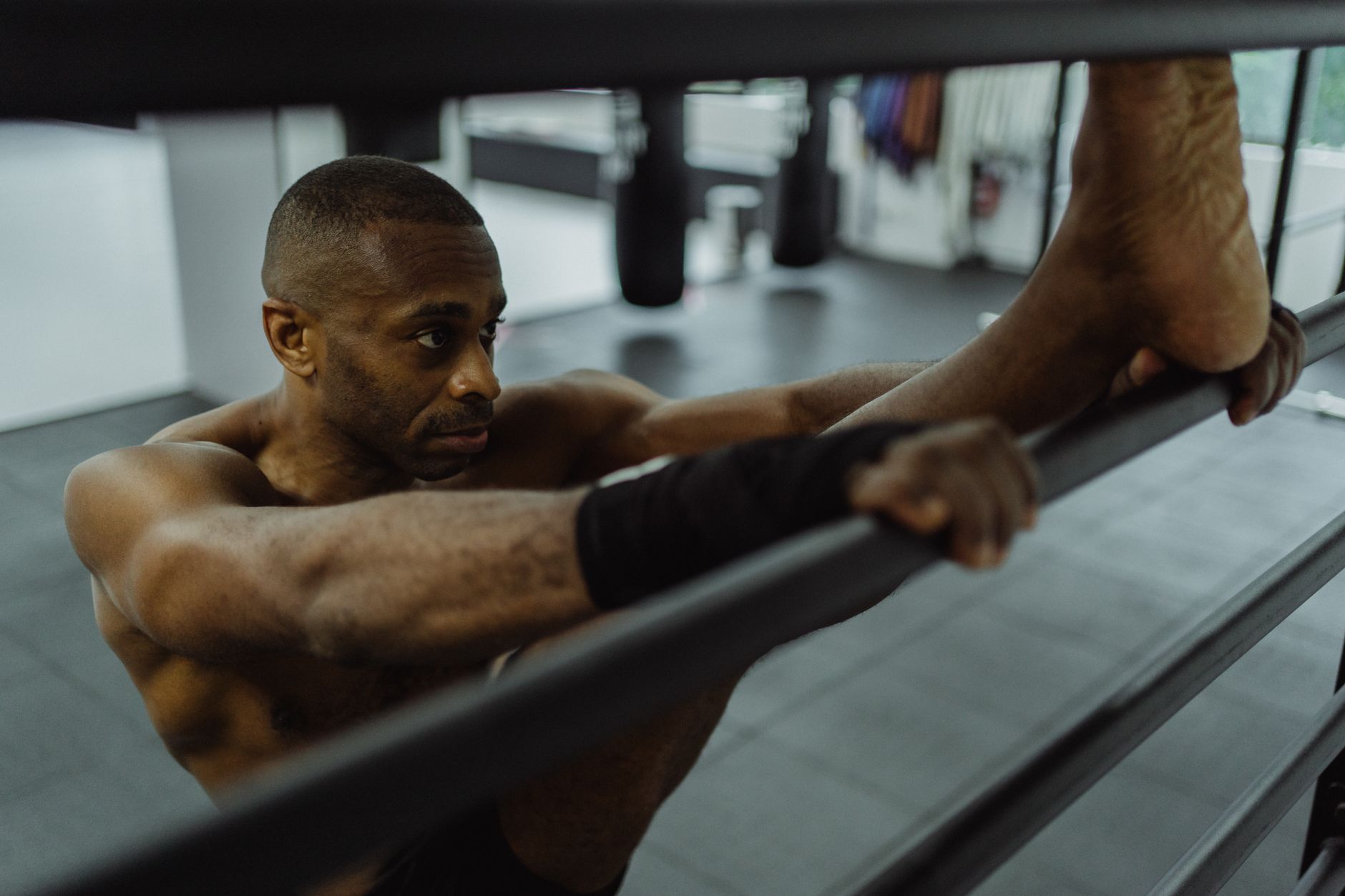
1. Warm Up Like You Mean It Before Every Martial Arts Training Session
Skipping the warm-up is one of the fastest ways to land on the injured list. A proper pre-training warm-up raises your core temperature, lubricates your joints, and activates the muscles you are about to use in striking, grappling, and footwork drills. At Dragon Mu Sool, every class in Simi Valley opens with a structured warm-up sequence that progresses from light movement to dynamic stretching to technique-specific drills.
Research from the American College of Sports Medicine consistently shows that a 10 to 15 minute active warm-up reduces soft-tissue injury rates during high-intensity activity. For Kuk Sool practitioners, this means joint circles, low kicks, hip openers, and partner mirror drills before anyone throws a full-speed technique. Think of your warm-up as the first training investment of the session, not a box to check before the real work starts.
If you train on your own between classes, build your own pre-training routine using the same structure: pulse-raiser, joint mobility, dynamic stretching. Keep your martial arts warm-up consistent and your body will thank you every session.
2. Master Proper Technique Before Adding Speed or Power
Injuries in martial arts rarely come from the technique itself. They come from rushing a technique that the body has not yet learned to perform cleanly. Proper martial arts technique is the foundation that allows you to eventually train at full intensity without breaking down. When form is solid, the force generated during a strike or joint lock travels through the intended pathway. When form is off, that same force lands on a joint or muscle that was never designed to absorb it.
Master Nathan emphasizes this principle in every Kuk Sool class in Simi Valley. Students learn the mechanics of each technique slowly and deliberately before speed is introduced. This approach is especially important for joint manipulation techniques, which are central to Kuk Sool’s self-defense curriculum. Rushing those techniques without correct form is a recipe for injury to both you and your training partner.
If you are exploring Simi Valley: Watts MMA any good? : r/bjj options and trying to decide where to train, look for a school where instructors slow things down to build technique before speed. That patience early on compounds into far greater progress later.
USA Karate guidelines for competitive training reinforce this same point: technical proficiency must precede intensity increases at every level, from white belt through black belt.
3. Listen to Your Body and Learn the Difference Between Discomfort and Pain
Hard training is uncomfortable. That is normal and expected. But there is a meaningful difference between the burn of a well-worked muscle and the sharp signal of a joint under stress or a muscle on the edge of a strain. Learning to read your body is a skill that experienced martial artists develop over time, and it is one of the most protective tools you can carry onto the mat.
Discomfort during a hard conditioning round or a deep stretch is your body adapting. Sharp, sudden, or localized pain during a technique is your body warning you. When you hear that warning, stop. Pushing through genuine pain in hopes of toughing it out almost always extends the recovery timeline rather than shortening it.
Instructors at Dragon Mu Sool in Simi Valley actively encourage students to communicate when something does not feel right. The culture is not one of “push through at all costs” but of intelligent effort and honest self-awareness. That distinction makes a real difference in keeping students healthy and on the mat for years, not just weeks.
According to Mayo Clinic’s fitness guidance, recognizing and responding to pain signals early is the single most effective way to prevent minor issues from becoming major injuries.
4. Build a Consistent Recovery Routine After Martial Arts Workouts
Recovery is not passive. It is an active part of your martial arts training plan, and treating it that way changes everything. A solid post-workout recovery routine for Korean martial arts includes a cool-down stretch, hydration, and deliberate attention to sleep quality. When your body recovers well, you can train harder in the next session without accumulating damage over time.
Harvard Health’s exercise and fitness research highlights sleep as the most powerful recovery tool available, noting that most adults need seven to nine hours for tissue repair and motor learning consolidation. Motor learning matters a lot in martial arts: the techniques you practiced during class are literally being wired into your nervous system while you sleep.
Beyond sleep, active recovery days, which include light movement, gentle stretching, and foam rolling, help clear metabolic waste from muscles and maintain range of motion. Students in Simi Valley who train three or more days per week at Dragon Mu Sool often find that scheduling one active recovery day between harder sessions keeps them feeling sharp rather than ground down.
Post-workout recovery for martial artists should also include nutrition timing. Getting adequate protein within an hour or two of training supports muscle repair and reduces soreness heading into your next class.

5. Strengthen Your Core and Stabilizer Muscles for Injury-Free Kuk Sool Training
Almost every technique in Kuk Sool originates from or passes through the core. Strikes, throws, joint locks, and evasive footwork all depend on a stable, strong midsection. When the core is weak, the spine, hips, and knees compensate in ways they were not designed to, and that is where overuse injuries develop.
Core strength training for martial arts does not mean hundreds of crunches. It means developing deep stabilizers through movements like planks, dead bugs, bird dogs, and rotational resistance work. These exercises build the kind of stability that shows up during a fast exchange on the mat, not just during slow isolated movements in the gym.
At Dragon Mu Sool, the martial arts programs integrate bodyweight conditioning that targets exactly these stabilizer systems. Students in Simi Valley who commit to this kind of supplemental work find that their techniques become cleaner and more powerful at the same time as their injury rate drops.
The National Academy of Sports Medicine identifies core stability training as a foundational component of injury prevention across all athletic disciplines, and that absolutely includes combat sports and traditional martial arts.
6. Progress Training Intensity Gradually and Avoid Overtraining
One of the most common reasons people get hurt in martial arts is doing too much too soon. Enthusiasm is a great thing, but ramping up training volume or intensity faster than your body can adapt is a direct path to overuse injuries. Tendons and ligaments adapt more slowly than muscles, which means you can feel strong while still being structurally vulnerable to strain.
A safe approach to increasing martial arts training intensity follows the ten percent rule: do not increase your weekly training load by more than ten percent from one week to the next. This applies to time on the mat, number of sessions, and intensity of sparring or drilling. If you are checking out the class schedule and thinking about jumping straight into five sessions per week, consider starting with two or three and building from there.
Overtraining syndrome is a real condition that presents as chronic fatigue, declining performance, mood changes, and elevated injury risk. For Simi Valley martial artists who are motivated and eager to progress, the harder discipline is sometimes restraint. Training smarter over time consistently beats training harder in the short term.
ACE Fitness recommends tracking perceived exertion alongside objective load to catch overtraining patterns before they become injuries. Keeping a simple training journal is one of the easiest ways to stay honest about your progression rate.
7. Use Proper Sparring Etiquette and Controlled Contact to Stay Safe
Sparring is one of the highest-value training tools in any martial art, and it is also one of the highest-risk if it is not conducted with the right culture. Proper sparring etiquette, including communication about intensity levels, respect for tap-outs, and calibrated contact, makes it possible to spar consistently for years without accumulating serious injuries.
At Dragon Mu Sool, sparring in Simi Valley is structured with clear expectations around control and respect. These are not just rules posted on the wall. They are part of the school’s core values of discipline, honor, and respect that run through every aspect of the Kuk Sool curriculum. Students learn early that going too hard in sparring does not make you tougher. It makes you someone that training partners cannot trust, and that limits your development.
If you are looking at what fitness martial arts simi valley adults options look like, the quality of a school’s sparring culture is one of the clearest signals of whether the environment is genuinely safe and growth-oriented. Good sparring culture is built from the top down by instructors who model it consistently.
Tap early and tap often in any grappling or joint-lock exchange. A tap is not a failure. It is the mechanism that keeps both training partners healthy and on the mat for the long run. For more detail on building a durable practice, check out our related post on Korean martial arts training in Simi Valley.
8. Address Foot and Ankle Strength as Your Foundation for Movement
Foot and ankle strength is one of the most underappreciated elements of injury-free martial arts training. Your foot and ankle complex is the first point of contact with the ground on every stance, step, kick, and pivot. When those structures are weak or unstable, the compensation chain works its way up through the knee, hip, and lower back, creating injury risks far from the original weak point.
Ankle stability training for martial artists includes single-leg balance work, calf raises on uneven surfaces, and band-resisted movements in all planes of motion. These exercises are simple, require no equipment, and can be done on recovery days or as part of your warm-up. Developing strong feet and ankles pays dividends across every aspect of your Kuk Sool practice, from the precision of your stances to the power of your kicks.
Students in Simi Valley who train barefoot on the mat are already building sensory awareness in the foot through natural proprioceptive feedback. Supplementing that with targeted strengthening work creates a complete foundation. Think of your foot and ankle complex as the base of every technique in your repertoire. When that base is solid, everything built on top of it is more stable and more powerful.
If you are looking for more options in the area, the Paragon Simi Valley: Brazilian Jiu page on our site has additional context about what Dragon Mu Sool offers locally.
9. Find a Supportive Training Community That Keeps You Accountable
Injury prevention is not only physical. The social environment of your training community has a direct impact on how safely and sustainably you train. A school where instructors know your name, notice when you are moving funny, and check in when you missed a class is a school where you are far less likely to train through an injury in silence or push recklessly to impress people who do not actually care about your wellbeing.
Dragon Mu Sool has built exactly that kind of community in Simi Valley. Reviewers consistently describe the school as a welcoming, family-oriented environment where Master Nathan and the instructors are genuinely invested in each student’s growth as a person, not just as a martial artist. That atmosphere makes it safe to admit you are hurting, to ask for a modification, or to take an extra recovery day without feeling like you are falling behind.
The CDC’s physical activity guidelines note that social support and accountability are among the strongest predictors of long-term exercise adherence. In a martial arts context, that means a good training community does not just keep you motivated. It keeps you training for decades instead of burning out in a year.
Children and adults alike benefit from this kind of structured, supportive environment. The American Academy of Pediatrics emphasizes that youth in organized martial arts programs with positive coaching show better long-term outcomes in both physical safety and personal development compared to unstructured training settings.
Start Training Smarter in Simi Valley Today
If you are serious about training harder without sidelining yourself with preventable injuries, the nine strategies above give you a clear roadmap. From warming up properly and building a recovery routine to finding a training community that actually looks out for you, every one of these habits compounds over time into a sustainable martial arts practice. Simi Valley has a gym that puts all of these principles into action every single class. Whether you are brand new to Korean martial arts or returning after time away, the fitness martial arts in simi valley option for serious students is Dragon Mu Sool. Come see what a structured, supportive Kuk Sool program looks like in person and contact us today for a free trial class at Dragon Mu Sool in Simi Valley.
Frequently Asked Questions
How to train hard without getting injured?
Train hard without getting injured by warming up thoroughly, building technique before speed, progressing intensity gradually, and prioritizing recovery between sessions. Listen to your body and distinguish discomfort from pain. Training in a structured program like Kuk Sool at Dragon Mu Sool in Simi Valley gives you coaching and accountability that dramatically reduces injury risk compared to self-directed training.
Is Korean martial arts safe for beginners in Simi Valley?
Yes. Korean martial arts like Kuk Sool are structured to introduce techniques progressively, which makes them accessible and safe for beginners. At Dragon Mu Sool in Simi Valley, beginners start with foundational movements and gradually advance as their body adapts. The emphasis on proper technique and a controlled training environment makes it one of the safest ways to get into martial arts training.
How many days per week should I train martial arts to avoid overtraining?
Most beginners do well training two to three days per week with at least one rest or active recovery day between sessions. As your conditioning improves over several months, adding a fourth session becomes appropriate. Overtraining happens when volume increases faster than the body can adapt, so build gradually and pay attention to how you feel heading into each session.
What should I do if I feel pain during a Kuk Sool class?
Stop the movement causing pain and let your instructor know right away. Do not push through sharp, localized, or sudden pain during any technique. Your instructor can modify the drill or suggest an alternative so you stay active without making the problem worse. Early communication is always the right call and is fully supported in Dragon Mu Sool’s training culture in Simi Valley.
Do I need prior fitness experience to start training at Dragon Mu Sool in Simi Valley?
No prior fitness experience is necessary. Dragon Mu Sool welcomes students of all fitness levels and ages. The curriculum is designed to build strength, coordination, and flexibility as you train, so you do not need to be in peak condition before you start. A free trial class is the easiest way to experience the program without any commitment.