Every student who walks through the doors at Dragon Mu Sool shares a common goal: they want to get better, faster, and stronger. But pushing harder in Kuk Sool training without a smart plan is one of the fastest ways to land on the sideline with a sprained wrist or a pulled muscle. The good news is that training harder and staying injury-free are not opposites. With the right approach, you can train harder in Korean martial arts, build real skill, and keep your body feeling good enough to show up the next day. Here are nine practical ways to do exactly that.
Warm Up Like Your Training Depends On It
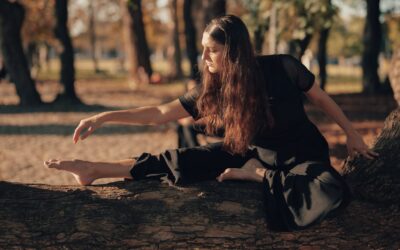
A proper warm-up is the single most overlooked injury prevention habit in any martial arts program. Before you throw a single kick or apply a joint lock, your muscles need to be warm, your joints need to be mobile, and your nervous system needs to be awake. A cold body moving at full speed is a recipe for a strain or a tear.
At Dragon Mu Sool, the warm-up is treated as part of the lesson, not a formality you rush through. Spend at least eight to ten minutes on dynamic movement: leg swings, hip circles, shoulder rolls, light jogging, and wrist rotations. Dynamic stretching before training and static stretching after training is the order that keeps tissue healthy. ACE Fitness consistently recommends this sequence for anyone doing high-intensity movement, and it applies directly to Kuk Sool practitioners who are throwing kicks, falling, and working throws in the same class.
Think of your warm-up as writing a permission slip for your body to work hard. Skip it, and your body will cash in that debt as an injury later.
Master the Basics Before Pushing Intensity
One of the most common mistakes students make when they want to train harder in Korean martial arts is skipping over the fundamentals. They want to do the flashy spinning kicks and the advanced joint locks before their stances are solid or their breakfalls are reliable. That gap between ambition and technique is where injuries live.
In Kuk Sool, the curriculum is built on layers. Each technique at the lower belt levels is preparing your body and your reflexes for the more demanding material ahead. When you try to jump ahead without that foundation, your body compensates with bad mechanics, and bad mechanics under load is how tendons and ligaments get hurt.
Master Nathan builds the Dragon Mu Sool curriculum this way on purpose. Mastering the basics is not slowing you down. It is the fastest path to training harder with less risk. Trust the process, nail your fundamentals, and your body will be ready when the intensity goes up.
Use Progressive Overload to Build Strength Safely
Progressive overload is the practice of gradually increasing the demand you place on your body over time. It is one of the foundational principles of physical training, and it applies to martial arts just as much as it applies to lifting weights. According to guidelines from NASM, the body adapts to stress in predictable ways, and overloading it too quickly disrupts that adaptation process and leads to injury.
In a Kuk Sool context, progressive overload might look like this: you start with slow, controlled practice of a throw. Over several weeks, you add speed. Then you add resistance from your partner. Then you practice it under mild fatigue. Each step builds on the last. Trying to add all of those variables at once is how you blow out a knee on a takedown.
Talk with Master Nathan or your instructor about where you are in your progression and what the next logical step looks like. A structured approach to increasing intensity is the difference between a student who trains harder every month and one who keeps re-injuring the same shoulder.

Prioritize Recovery Between Korean Martial Arts Classes
Recovery is training. This is not a cliche. It is physiology. When you push hard in Korean martial arts practice, you are creating microscopic stress on your muscles and connective tissue. The adaptation that makes you stronger and more skilled happens during the recovery period, not during the session itself. Cut your recovery short and you show up to the next class already in a deficit.
Practical recovery habits for Kuk Sool students include: getting seven to nine hours of sleep per night, eating enough protein to support tissue repair, staying well hydrated, and taking at least one full rest day per week. Harvard Health notes that sleep in particular is one of the most powerful recovery tools available, and it costs nothing.
Active recovery also works well on lighter training days. A slow walk, gentle mobility work, or some light stretching keeps circulation moving without adding more stress to your system. Students who build confidence through martial arts over the long haul are usually the ones who take recovery just as seriously as they take their kata.
Train Your Core for Martial Arts Stability
A strong core is protective armor for your spine, hips, and lower back. Every strike, throw, kick, and joint technique in Kuk Sool originates from or passes through the core. If that foundation is weak, every technique puts undue stress on the structures around it, and that stress accumulates into injury over time.
Core training for martial arts stability is not about doing hundreds of crunches. It is about training the core to resist movement and transfer force efficiently. Exercises like planks, dead bugs, pallof presses, and bird dogs build the kind of deep core stability that protects you during throws, groundwork, and weapons training. The NSCA emphasizes anti-rotation and anti-extension core work as especially valuable for athletes in contact sports, and those same principles translate directly to the demands of Kuk Sool.
Ask your instructor how to incorporate core stability work into your supplemental training. Even ten focused minutes a few times a week can make a meaningful difference in how your body holds up under hard training.
Communicate With Your Training Partners
This one sounds simple, but it is genuinely one of the most powerful injury prevention strategies in a martial arts school. At Dragon Mu Sool, students are taught from day one that respect for your partner is a core value. That respect includes honest communication about where your body is at before and during a session.
If your wrist is sore from last class, tell your partner before you start practicing wrist locks. If a technique is moving too fast for you to execute safely, say so. A good training partner in Korean martial arts practice will adjust, and you would do the same for them. No technique is worth your partner’s injury, and no ego is worth yours.
Partner communication also includes tapping. In any grappling or joint locking drill, tapping is not a sign of weakness. It is the system working exactly as it should. Tap early, tap clearly, and do not hold out to see how long you can take it. Healthy students train longer and improve faster than injured ones every single time.
Listen to Pain Signals and Address Them Early
There is a real difference between the discomfort of hard training and the pain signal that something is wrong. Learning to tell these apart is a skill that every serious martial artist needs to develop. Muscle fatigue and mild soreness the day after a tough class are normal. Sharp pain during a movement, pain that lingers more than a few days, or swelling around a joint are signals your body is asking for attention.
The biggest mistake students make when they want to train harder without injury is ignoring those early signals. A minor strain that gets two days of rest and some ice usually heals in a week. The same strain that gets pushed through for another two weeks because a student did not want to miss class can become a months-long problem.
If something is consistently hurting, talk to Master Nathan or a qualified healthcare provider before it escalates. The Mayo Clinic recommends stopping activity and seeking evaluation any time pain is sharp, sudden, or accompanied by swelling or limited range of motion. Catching issues early is one of the smartest injury prevention steps you can take.
Build Flexibility and Joint Mobility for Long-Term Training
Flexibility and joint mobility are not just about looking impressive with a high kick. They are protective qualities that reduce your risk of strain during the wide range of motion demands in Kuk Sool training. Tight hips, stiff ankles, and restricted shoulder mobility all create compensation patterns that put stress on the wrong structures at the wrong times.
Building flexibility for martial arts requires consistent work over time. Static stretching held for thirty to sixty seconds is most effective after training when tissues are warm. Dedicated mobility sessions on off days can accelerate progress. Areas worth prioritizing for Kuk Sool students include the hip flexors, hamstrings, thoracic spine, and wrists and forearms.
You do not need to be a gymnast to train safely. You just need enough range of motion to execute your techniques with good mechanics. build confidence through martial arts starts with a body that can move freely, and that freedom is something you cultivate with patient, regular work off the mat as well as on it.
Set Smart Training Goals That Prevent Overtraining
Overtraining is a real phenomenon, and it is more common in motivated martial arts students than many people realize. When you love what you are doing, it is easy to train every single day, skip rest, and push through warning signs because you want to improve. But the body has limits, and overtraining drains your immune system, disrupts your sleep, dulls your reflexes, and makes injury far more likely.
Setting smart training goals means being specific about what you want to improve, realistic about your current capacity, and intentional about the recovery built into your schedule. A student training three to four times per week with proper sleep and nutrition will almost always outperform a student grinding six days a week with poor recovery, both in skill development and in staying healthy enough to keep showing up.
Talk with Master Nathan about what a sustainable training schedule looks like for your current fitness level and life demands. Dragon Mu Sool’s approach to personal development means the instructors are invested in your long-term growth, not just what you can do in this week’s class. A plan that keeps you training for years will always beat one that burns you out in months.
Ready to put these injury prevention strategies into practice inside a supportive and skilled community? Visit Dragon Mu Sool and contact us today for a free trial class at our Korean martial arts and self-defense studio. Master Nathan and the entire Dragon Mu Sool family are ready to help you train smarter, grow stronger, and build skills that last a lifetime.