BJJ Fundamentals Every Beginner in Simi Valley Needs to Master
Shrimping, Bridging, and Why These Two Movements Change Everything
Understanding Basic BJJ Positions and Why Position Before Submission Matters
Gripping: The Small Detail That Makes a Huge Difference in BJJ Training
We Never Forget the Basics: Why Returning to Fundamentals is the Secret to Long-Term Growth
How Korean Martial Arts Principles Reinforce Your BJJ Journey
Ready to Learn BJJ Fundamentals in Simi Valley? Here Is Your Next Step
If you have recently started exploring Brazilian Jiu-Jitsu, you already know there is a lot to take in. Positions, submissions, escapes, drills, it can feel like drinking from a fire hose in those first few weeks. But here is the truth that every experienced grappler will tell you: the students who stick with it and actually improve are the ones who stop chasing individual moves and start understanding the principles underneath them. At Dragon Mu Sool, one of the most respected Simi Valley Martial Arts Schools, Master Nathan and his team see this pattern play out with new students every single week. When you train with a principle-first mindset, everything else clicks faster, your technique becomes more consistent, and you stop forgetting what you learned the class before.
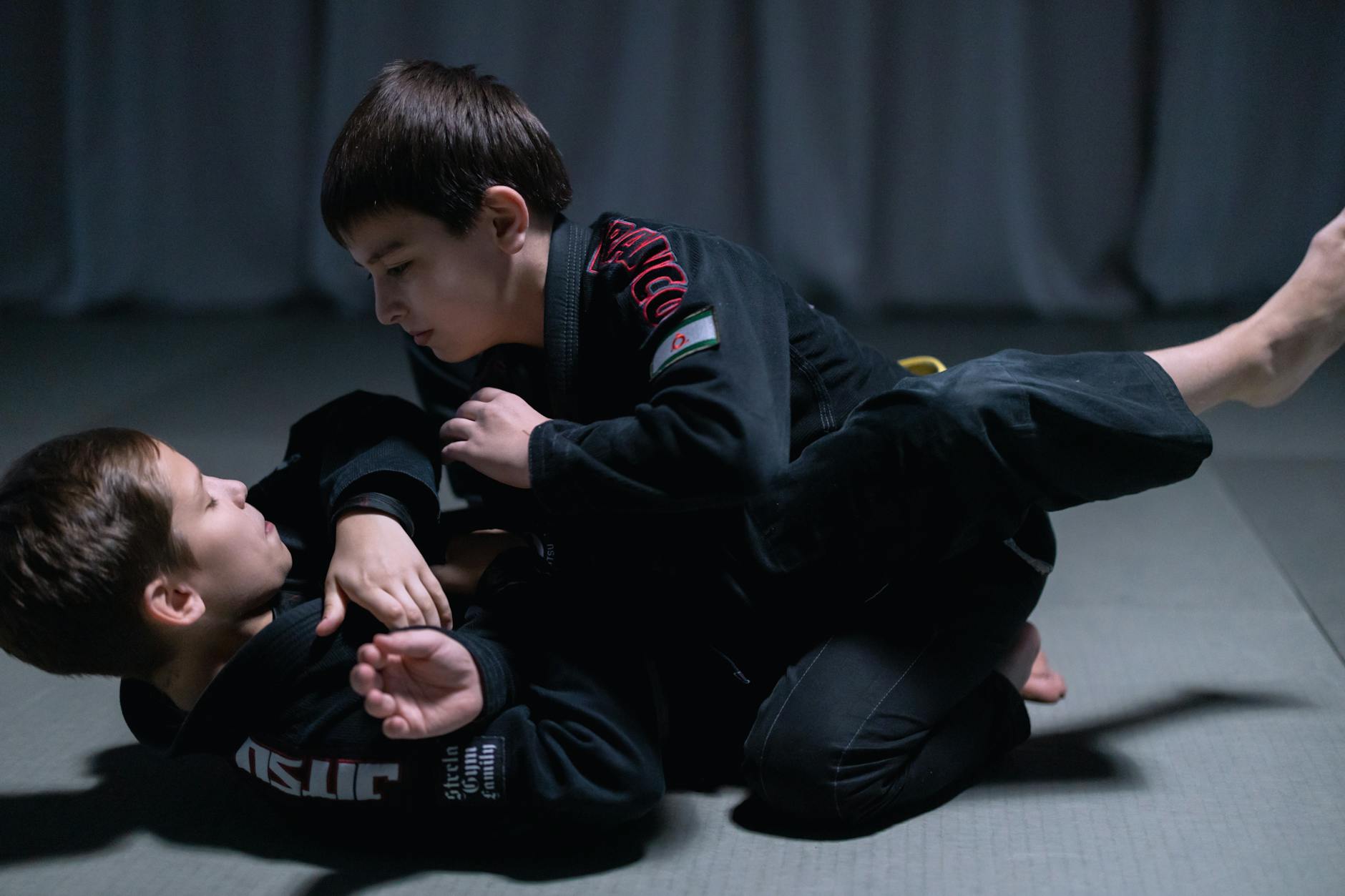
Simi Valley has a growing community of martial arts enthusiasts, and if you are ready to get started with BJJ fundamentals, this post is for you. We are going to walk through three core principles that will shape how you think on the mat from day one. These are not secret techniques. They are the foundational ideas that separates students who plateau from the ones who keep growing.
BJJ Fundamentals Every Beginner in Simi Valley Needs to Master
Before we get into specific movements and positions, it is worth understanding what a BJJ fundamental actually is. A technique is a specific move, like an armbar or a triangle. A fundamental, on the other hand, is a concept or principle that makes dozens of techniques work. Learning fundamentals first means you are building a framework, not just collecting individual tricks. According to the IBJJF, the governing body of competitive jiu-jitsu, sound positional awareness and base mechanics are consistently the separating factors between beginners who progress and those who stagnate. At Dragon Mu Sool in Simi Valley, the curriculum reflects exactly this philosophy. New students spend real time on the basics before they ever worry about advanced submissions. If you are looking into 805 Combat Sports: Jiu Jitsu Simi Valley options or comparing schools in the area, understanding this principle-first approach will help you make a smarter choice.
Shrimping, Bridging, and Why These Two Movements Change Everything
If you ask any seasoned BJJ practitioner what the two most important movements for a beginner are, the answer is almost always the same: shrimping and bridging. These are sometimes called the “alphabet” of grappling, because almost every escape, guard recovery, and positional transition builds on them.
Shrimping (also called the hip escape) is the movement where you push off one foot, shift your hips sideways, and create space between yourself and your training partner. It sounds simple. It is not easy. But once your body learns this movement pattern through repetition, you will start seeing it everywhere: recovering guard, escaping side control, setting up sweeps. Bridging is the opposite motion, driving your hips upward to off-balance someone on top of you. Together, shrimping and bridging form the mechanical vocabulary of ground fighting. Research from NASM on movement pattern training confirms that motor learning for physical activities is fastest when foundational movement patterns are drilled in isolation before being applied in complex scenarios. In practical terms, that means drilling your hip escapes and bridges before you ever worry about submissions. At Dragon Mu Sool in Simi Valley, beginners spend significant mat time on these two movements precisely because they pay dividends in every class that follows.

Understanding Basic BJJ Positions and Why Position Before Submission Matters
One of the first phrases you will hear in any serious grappling class is “position before submission.” This is not just a catchy saying. It is a core BJJ principle that reflects how the art actually works. Submissions, the chokes and joint locks that end a match, are almost always the result of first achieving a dominant position. If you skip straight to hunting for submissions without establishing position, you are building your attack on an unstable foundation.
The basic BJJ positions every beginner should understand include the guard (where you are on your back with your legs controlling your opponent), mount (where you are on top straddling your opponent), side control, and back control. Each position comes with a set of offensive options and a set of defensive priorities. Learning these positions as a framework, rather than as isolated snapshots, helps you understand the flow of a match and where you are in it at any given moment. ACE Fitness research on sports-specific training notes that contextual understanding of movement, knowing not just what to do but why and when, dramatically accelerates skill acquisition for martial arts students. In Simi Valley, Dragon Mu Sool’s martial arts programs are structured around this exact logic, giving students a positional map to follow rather than an overwhelming list of techniques to memorize.
Gripping: The Small Detail That Makes a Huge Difference in BJJ Training
Gripping might be the most underrated fundamental in BJJ for beginners. New students often focus so much on where their body is positioned that they completely ignore how they are holding on. But your grip is your primary connection to your training partner, and a weak, misplaced, or reactive grip will undermine every other technique you try to apply.
There are a few key ideas around gripping that every beginner should absorb early. First, grips are offensive tools, not just things you grab reactively. Establishing the right grip often determines who controls the exchange. Second, grip fighting, the mini-battle that happens before the bigger technique, is a skill in itself and one that separates higher-level players from beginners. Third, maintaining grip strength and endurance matters for sustained performance on the mat. Harvard Health’s guidance on exercise and physical performance points out that grip strength is linked to overall functional fitness and athletic longevity, making it worth developing intentionally from day one. If you are curious about Fitness martial arts in simi valley prices and what kind of training quality you can expect, Dragon Mu Sool’s approach includes this level of technical detail from the very first class. You will not just be told to “grab”, you will understand why grip placement matters and how to use it intentionally. As you compare your options, you might also explore Paragon Simi Valley resources to get a fuller picture of what the local grappling community looks like.
We Never Forget the Basics: Why Returning to Fundamentals is the Secret to Long-Term Growth
Here is something that surprises many beginners once they get a few months of training under their belts: advanced students drill the same basic movements as beginners. The shrimping, the bridging, the positional drills, they never go away. This is intentional. In Korean martial arts traditions like Kuk Sool, which is the core art taught at Dragon Mu Sool in Simi Valley, there is a deep respect for foundational practice. Master Nathan emphasizes that discipline and consistency with the basics is not a sign that you have not progressed. It is a sign that you understand how growth actually works.
The BJJ basics you learn in your first month will be the same mechanics you rely on when things get difficult in sparring two years from now. The difference is that over time, those movements become faster, more instinctive, and more integrated with your overall game. Black Belt Magazine has written extensively about how the greatest martial artists across disciplines return to fundamentals as a lifelong practice, not just a beginner phase. Students who train at Dragon Mu Sool in Simi Valley consistently mention in their feedback that this family-oriented, principle-driven culture makes them feel genuinely supported at every level, whether they are brand new or have been on the mat for years. You can check the class schedule to see how sessions are structured and where you might fit in as a beginner.
How Korean Martial Arts Principles Reinforce Your BJJ Journey
One thing that makes Dragon Mu Sool a distinctive place to begin your martial arts journey in Simi Valley is that the school does not treat BJJ concepts in isolation. Kuk Sool, the Korean martial art at the heart of the curriculum, shares deep philosophical roots with ground-based grappling arts. Respect for the fundamentals, commitment to disciplined practice, and personal development alongside physical growth are all values baked into Korean martial arts training. These are not abstract ideas. They show up in how students are taught to approach each class, how they treat their training partners, and how they think about their own progress over time.
For beginners especially, this environment matters enormously. Learning BJJ principles is hard enough without also having to navigate a culture that does not support you. At Dragon Mu Sool in Simi Valley, the welcoming, family-oriented atmosphere means you can ask questions, make mistakes, and grow at your own pace without feeling judged. The instructors are genuinely invested in each student’s journey, and that investment shows up in how carefully the fundamentals are taught and reinforced.
Ready to Learn BJJ Fundamentals in Simi Valley? Here Is Your Next Step
If this post has you thinking seriously about getting on the mat, there is no better next step than experiencing it for yourself. Understanding principles in theory is one thing. Feeling how shrimping creates space, how grip placement shifts control, and how positional awareness changes your entire experience of grappling, that only happens when you train. Whether you are brand new to martial arts or coming in with some background, Dragon Mu Sool in Simi Valley is the kind of school that meets you where you are. We also offer a wide range of programming beyond BJJ concepts, so if you have explored Muay Thai Simi Valley options or are simply curious about Korean martial arts, there is plenty to discover here. Contact us today for a free trial class and come see what training with a principle-first, community-focused school actually feels like.